

Many businesses struggle to show how their products or services really make a difference. And it is actually a big deal as it can slow down sales and weaken trust.
Companies miss out on growth because their value isn't easy to understand or prove. Without real stories and data, claims can seem empty or unrealistic.
In this article, we'll explain how to create powerful case studies that clearly tell your client's story, show real results, and build trust. We'll break down each step so you can make case studies that attract and convince new customers.
Key Takeaways
- A case study in marketing shares how real business problems were solved, using facts, data, and client stories to show real results.
- Case studies build trust quickly by showing proof of success, helping shorten the sales cycle and ease buying decisions.
- They showcase true impact with measurable outcomes, supporting data-driven decisions that help businesses confidently choose the best solutions.
- Case studies and testimonials serve as different yet complementary trust signals: case studies provide detailed stories and data, while testimonials offer quick, personal endorsements.
- A great case study typically includes sections such as the client background, a clear problem or challenge, a detailed and comprehensive solution, results with supporting data, and optional key takeaways.
- Use visuals, client quotes, clear structure, and repurpose your case study across channels to maximise reach and engagement.
What Is a Case Study in Marketing?
In a marketing context, a case study is a detailed look at how a real-life business problem was solved, using facts, data, and stories from people or entities involved, which could be a client or customer. It shows what happened, how challenges were tackled, what steps were taken, and what results came out in the end.
Case studies are not just stories. They highlight one business, customer, or project and explain the entire journey from start to finish, providing clear evidence and outcomes to emphasise that your product or service works in real-world situations. Instead of writing about features or promises, you let the results speak for themselves.
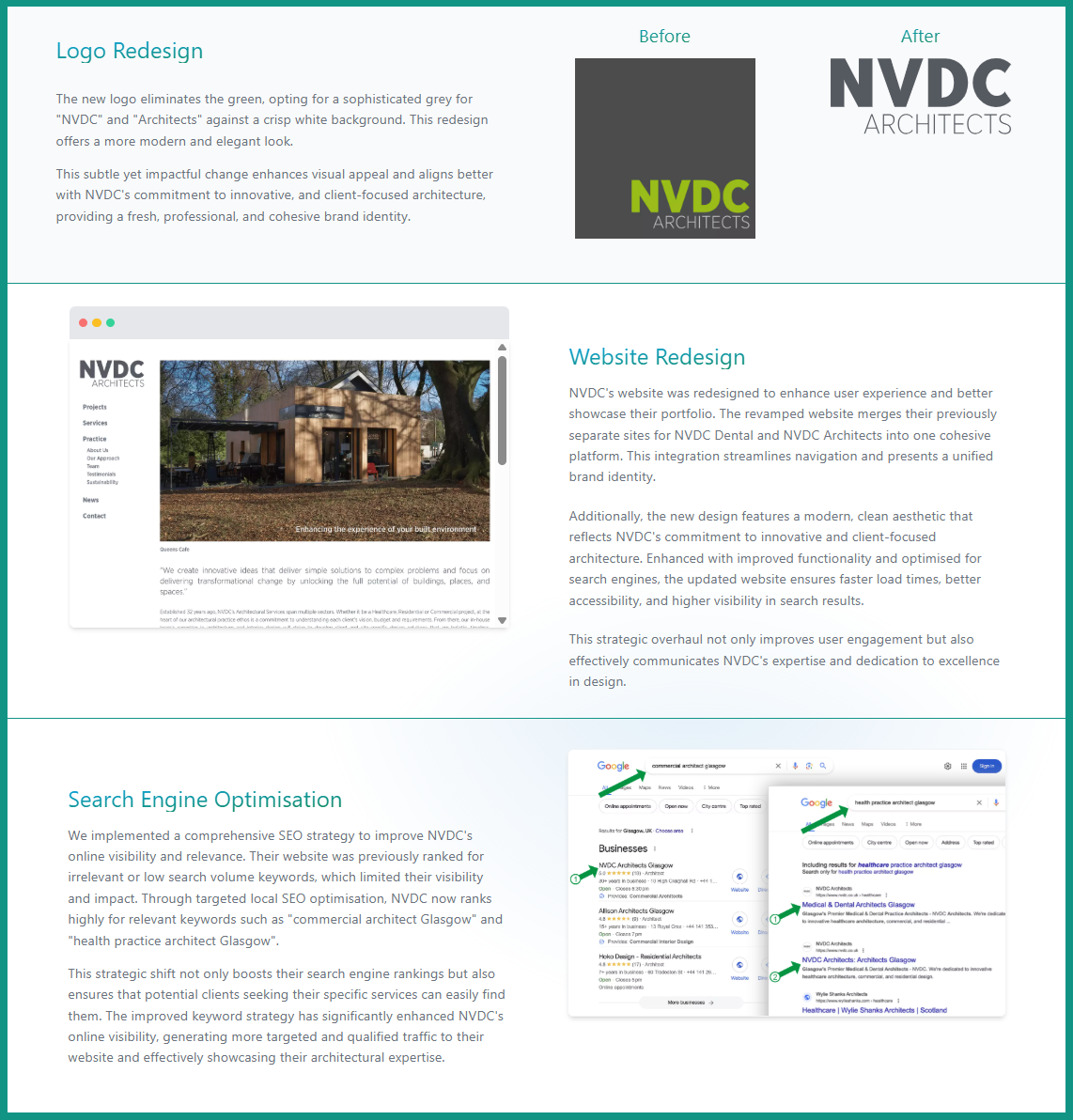
If you haven't seen one before, the image below is part of our case study on NVDC Architects. We'll use their story as an example across all sections of the case study, but you can click here to view it in full.
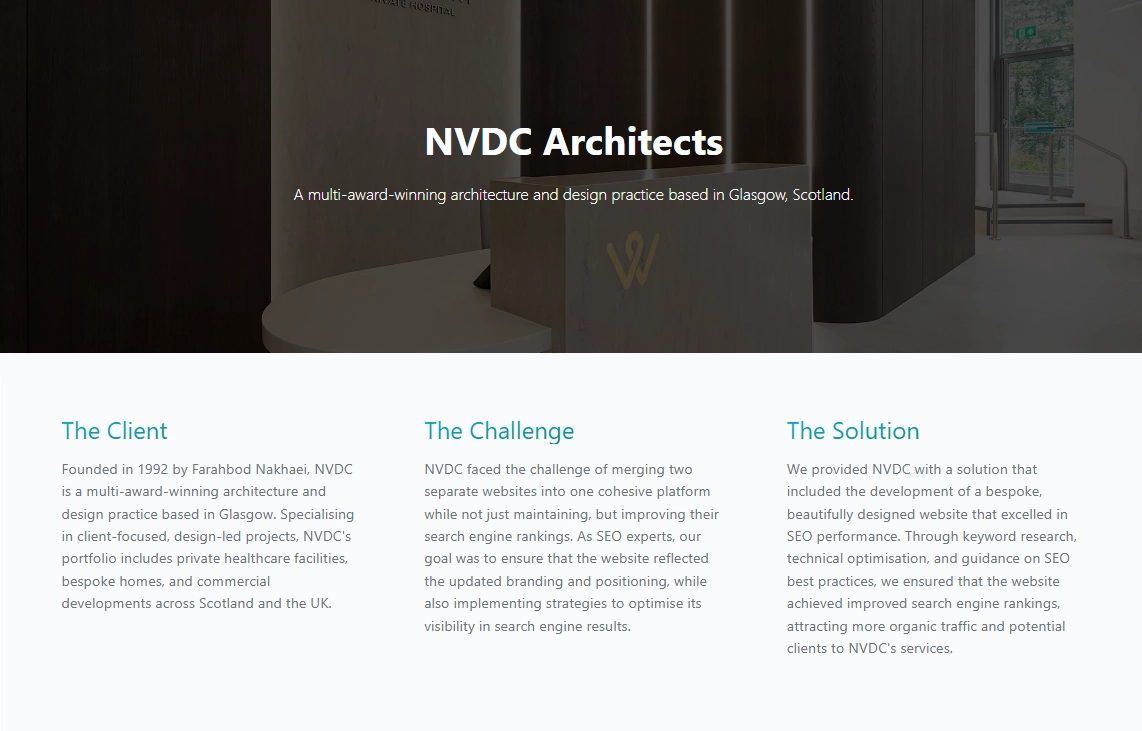 Adonis Media's case study on long-term client NVDC Architects. Click here to read more.
Case studies also add a human touch to business communication. When potential customers read about someone who had a similar challenge and solved it using your solution, they are more likely to relate and see themselves in that story.
Both B2B and B2C brands can use case studies to their advantage. In B2B, case studies often focus on problem-solving and measurable results between businesses, like boosting sales, improving systems, or saving money. In B2C, case studies might tell the story of how a brand helped individual customers, improved their lives, or solved a common problem.
Why It Matters for Business Growth
When a potential customer reads a case study, they see how someone else faced a problem and solved it with the help of your product or service. However, it doesn't end with their good impression. Let's look more at how case studies can benefit your business in different aspects.
Builds Trust and Credibility Quickly
Trust is hard to earn, especially in marketing. People want to do business with companies they believe are honest and reliable. Case studies help build this trust fast. When prospects see data and success stories, they know the business has done good work before.
A well-made case study includes clear facts and numbers to really demonstrate that the company has made it with effort and is not just making empty claims. People relate to stories from other customers who faced similar problems, which makes them feel understood and confident.
Because case studies are based on real experiences, they create social proof. Seeing others' success builds credibility and helps prospects believe that the business is trustworthy. Unlike ads that just promote, case studies show proof, making them powerful tools to gain trust quickly.
Shortens the Sales Cycle
A sales cycle is how long it takes for someone to go from interested to buying. Case studies can make this process faster — a great advantage for B2B marketing's lengthy sales cycle. Removing doubts always helps speed up buying decisions.
By clearly showing how a product or service solved a problem, case studies reduce the back-and-forth between buyers and sellers. Sales teams spend less time explaining and more time closing deals.
Case studies also help sales teams focus on the right customers. When prospects see relevant success stories, they move through the buying journey more smoothly. They don't stall as much because their questions are already answered, cutting down delays.
Demonstrates Real-World Impact
Case studies show the true effects of a product or service in real business settings. They move beyond promises by sharing actual results companies have experienced. This helps potential customers see tangible benefits instead of just hearing claims.
For example, a company might say it saved another business millions in costs or helped them grow sales by a big percentage. Showing these outcomes with numbers makes the impact easy to understand and trust.
Additionally, case studies often highlight more than just direct financial gains. They also show how companies improved efficiency, customer satisfaction, or reached new markets. This broad view helps people see the full potential impact, not just dollars and cents.
Supports Data-Driven Decision Making
In the current state of business world, decisions based on data tend to be smarter and less risky. Case studies help support data-driven decisions by providing clear examples of results backed by facts.
They provide valuable data points like percentages, time saved, or growth figures that help businesses compare options. Seeing what worked for others in similar situations allows companies to plan with more confidence.
Case Study vs Testimonials
When it comes to showing off the success of your product or service, case studies and testimonials are both useful tools. They both help build trust and show that your business delivers results.
However, they are quite different in how much detail they give and how they present the customer's story. If you just heard of the case study in marketing, understanding these differences can help your business choose the right one at the right time to attract and win new clients.
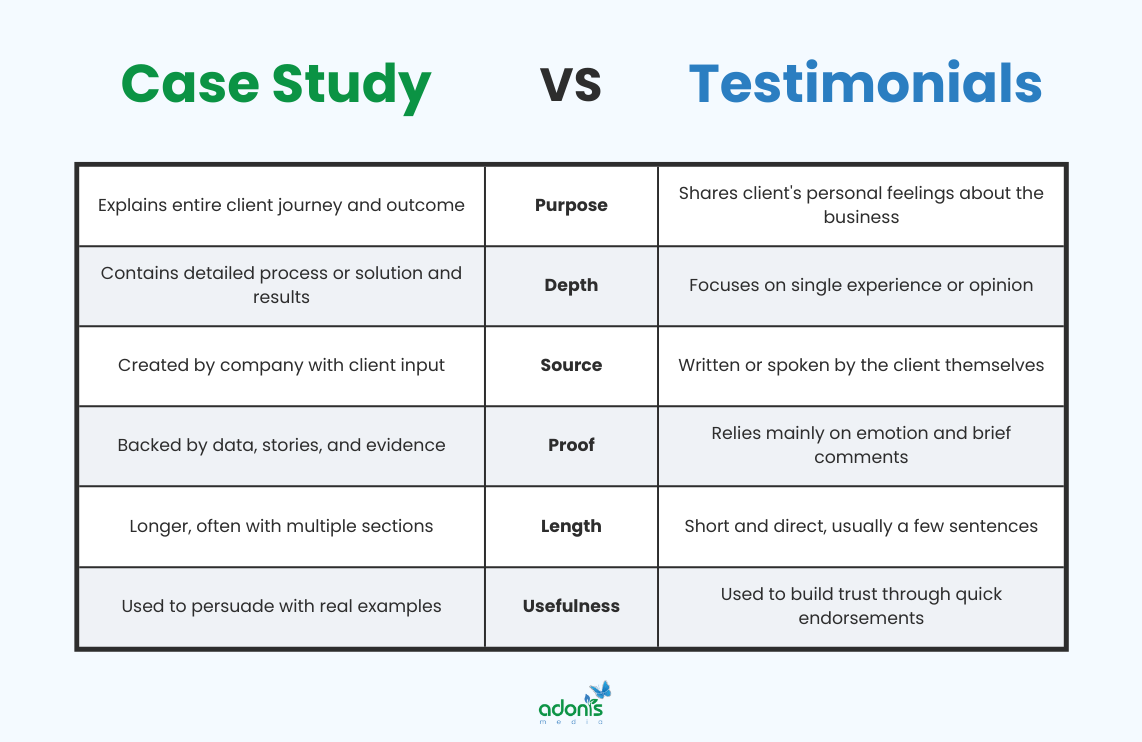
The Difference Between the Two
As mentioned, a case study is a detailed story that explains the problem a customer or client faced, how your business solved it, and the results achieved. It is much more than a quick quote or praise. Case studies include facts, figures, and sometimes direct quotes.
For example, a case study might show how a company saved 20 percent on costs thanks to your solution. These detailed stories help potential customers understand the exact benefits and the impact your service can offer.
On the other hand, testimonials are shorter and focus on the customer's personal experience or satisfaction. They are usually brief statements praising your product or service. Testimonials don't typically go into details about the challenge or the results.
Instead, they offer a quick way for happy customers to say, "I liked the way they improved my business" or "This helped me." Sometimes, it's even accompanied by star ratings to emphasise your service or product more.
As an example, the image below shows both. The Snap Solar case study is quite short because it serves mainly as a trust signal on one of our service pages, rather than presenting a complete case study. That said, you can already see that the case study (boxed in green) differs from the testimonial (boxed in blue), based on how we define each.
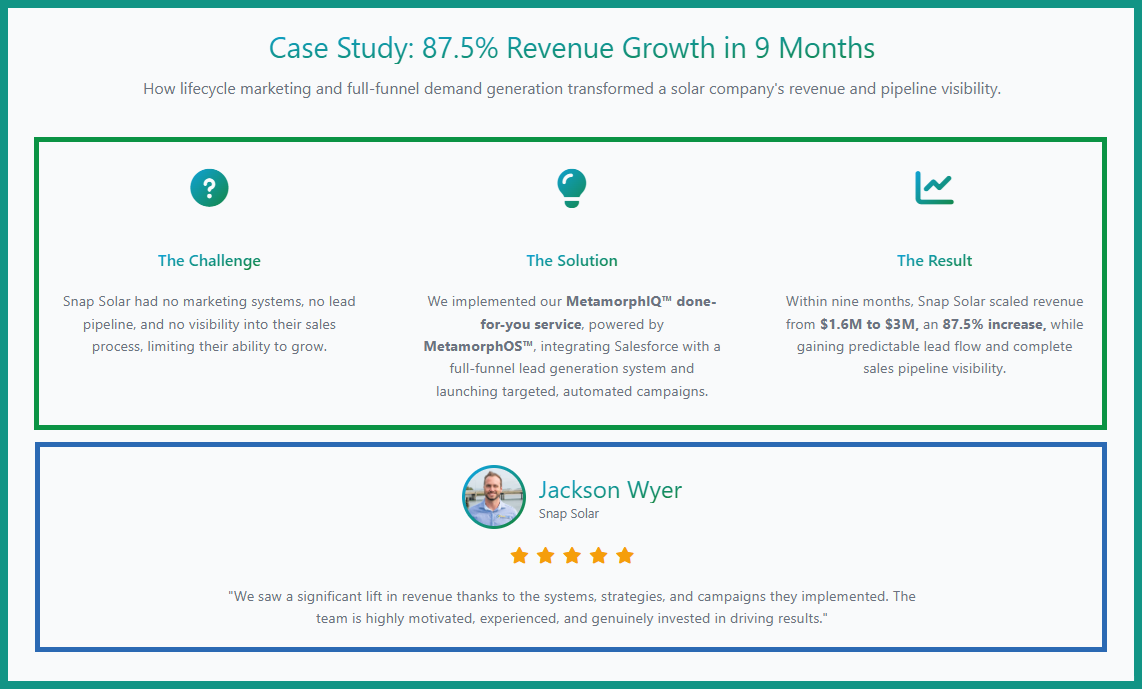
Another difference between the two is where the information comes from. Testimonials are usually written or recorded by customers themselves. Case studies are often created by the company using customer interviews and data to tell a full story. Because of this, case studies are more formal and research-driven, while testimonials are more casual and emotional.
How They Work Together
Case studies and testimonials work best when used together. While case studies provide the full, detailed proof that your product delivers results, testimonials add quick, personal endorsements that build trust as well.
Businesses can use testimonials to draw attention and warm up potential customers. Then, case studies can take those interested people deeper into how and why your service works.
For example, you might feature testimonials on your homepage or product pages to show real people who liked your service. Alongside those, you provide links to detailed case studies where prospects can explore success stories that match their own situation.
Using both tools also increases the chances of engaging different types of prospects. Some people prefer short and sweet recommendations, while others want to see detailed data and results before making a decision.
The Anatomy of a Great Case Study
Creating a great case study is like telling an interesting story that also shares useful facts. It needs to be clear, easy to follow, and show real value. But take note: you don't just want to create one without learning its structure and other things it has.
If you want to create a great one, knowing what to include is a must. Let's break down the essential parts of a strong case study and see what makes each one important.
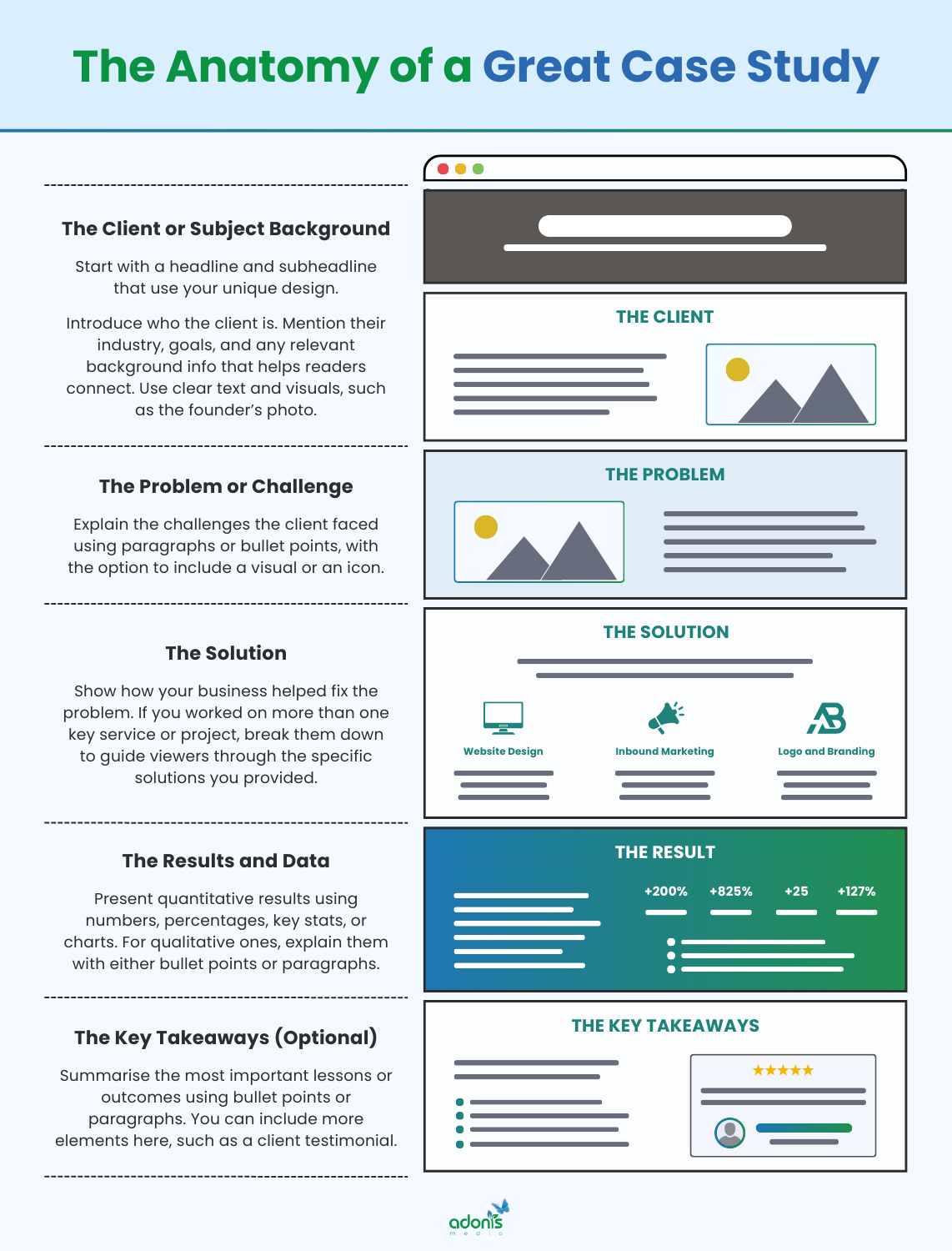
The Client or Subject Background
This part introduces the main character: the client or subject of the case study. It gives some context about who they are and what they do. This part is essential as readers must understand their situation and relate to their story better.
For this section, make sure you have chosen the clients whom you have helped the most, you have the data to show, or those that best represent the kind of work you do. Clients with clear, measurable results make your case study stronger and more credible.
A few details to consider include, but are not limited to:
- Business or company name
- Year founded and director or founder's name
- Role or department of the client contact
- Location of the business (city, country)
- Type of business and industry (e.g., SaaS)
- Range of services or specialisations
- Notable achievements or reputation
Adding background information helps connect the reader to the story. It answers questions like "Who is this about?" and "Why does their problem matter?" This section should be concise but informative. It can also include the client's goals or what they hoped to achieve before working with your product or service.
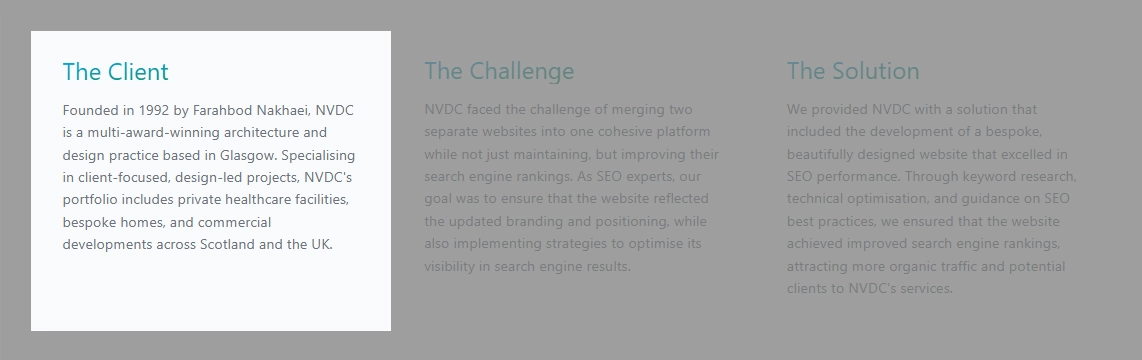
As mentioned, we'll use our NVDC Architects case study for the examples.
We always start each case study with The Client section, which outlines the client's background and specialties. For NVDC Architects, for instance, we highlight their founding year, multi-award-winning status, and other unique details to give readers helpful context before diving into other sections.
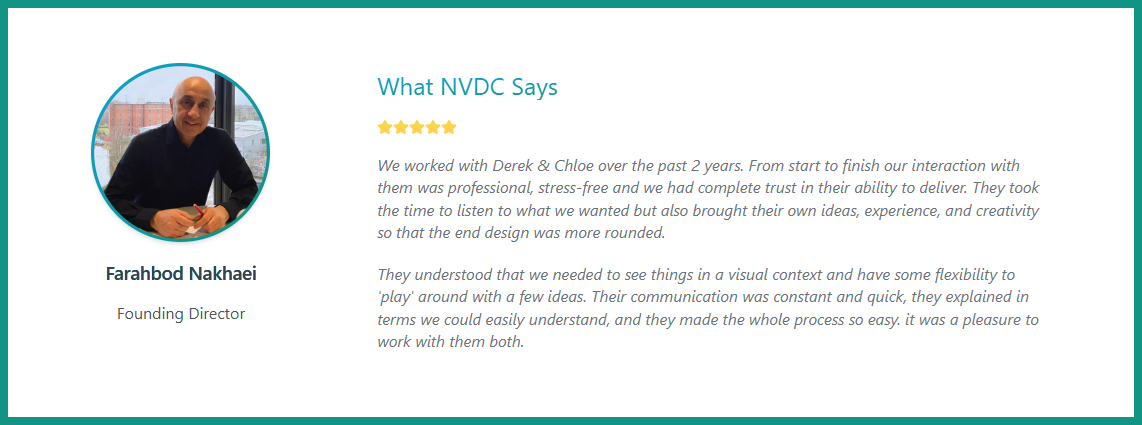
We also include a client testimonial to provide additional context on how we serve our clients and their experience with us. Sometimes, testimonials are added to the key takeaways section, but since it's optional, we place them where they fit naturally within the case study.
The Problem or Challenge
After setting the scene, the case study moves to the main challenge. This is the problem the client was facing before they found a solution.
It's important to clearly describe the challenge in a way that readers can understand and see themselves in. The problem could be anything from low sales numbers, inefficient processes, difficulty reaching customers, or high costs. The clearer the problem is described, the more the reader will feel the need for a solution.
For example, losing customers due to outdated technology or wasting hours on a slow manual task. Paint a picture of the pain points and the impact on the business.
Here are some points to highlight:
- What exactly was wrong or causing frustration for the client?
- How did this problem affect the client's day-to-day work or overall business goals?
- Why was solving this problem urgent?
- Was the client losing customers, falling behind competitors, or facing regulatory issues?
- Has the client tried to fix this problem before?
- What impact did the problem have on people involved?
- What were the risks of not fixing the problem?
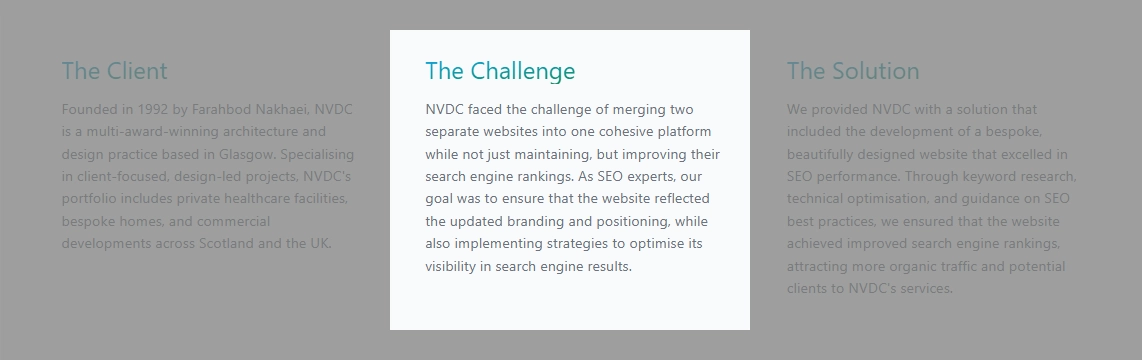
For NVDC Architects, we clearly outline the main challenge or obstacle the client faced before working with us. We detail their struggle with merging two separate websites while aiming to improve SEO and maintain brand consistency.
At the same time, we already position ourselves in this part as the expert partner they need. You can also use this technique to establish trust and confidence from the outset, showing readers why you are the right team or business for the job or project.
The Solution
This part explains how your product or service helped the client overcome their problem or challenge. It's where you show what you did to fix the situation and why it worked. And a strong solution section goes beyond simply saying "we helped."
It doesn't end with just a block of paragraphs like the client background and the problem or challenge. A great case study can go deeper by breaking down each part of the work you did. So instead of just saying "we helped improve their branding and website," you can discuss specific projects by making subsections in this part.
For example, you might have helped them with a logo redesign, paid advertising, and search engine optimisation — all different but connected pieces working towards the same goal. Instead of lumping everything into one paragraph, break down these tasks individually.
Different readers may be interested in different parts, such as design or marketing, and giving attention to each helps you connect with a wider audience.
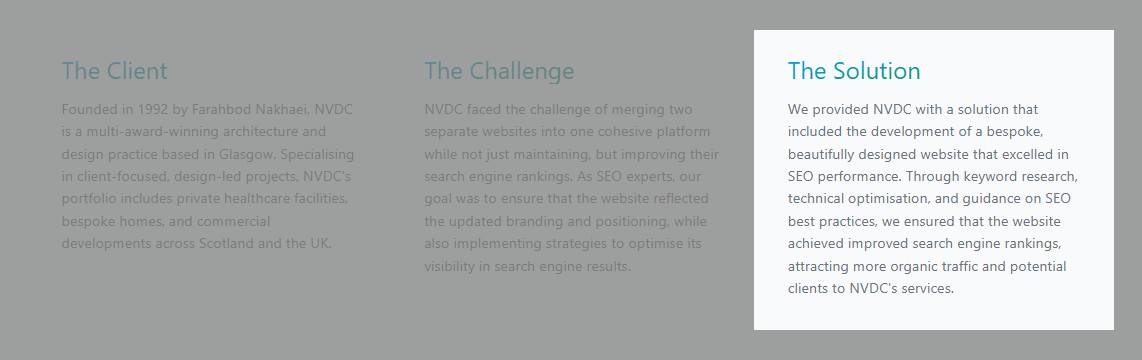
In the case of NVDC Architects, we provide a concise summary of the comprehensive strategy and services implemented for them.
And since we have multiple projects with them, we broke them down to create a clearer narrative of the work completed. By describing each one in detail, we make the results more concrete. It not only communicates the breadth of work but also helps potential clients see exactly how each service delivered value to the project.
The Results and Data
This is the most important part because it shows the real impact of your solution. Here, you share measurable results like increased sales, saved time, reduced costs, or improved customer satisfaction.
Numbers and data make the story believable and persuasive. The more specific and quantifiable the results, the stronger the case study becomes.
Besides numbers, you may include quotes from the client praising the results or describing how their situation improved. Visual aids like charts, graphs, or before-and-after comparisons may also help make the data easier to grasp.
Be sure to connect the results back to the original problem and goals. Show how the solution addressed the specific challenges and led to success.
Some good points to include are:
- Percentage improvements, like "50% faster processing time"
- Dollar amounts saved or earned
- Customer satisfaction scores or feedback
- Timeframes for seeing results
- Any unexpected benefits or positive changes
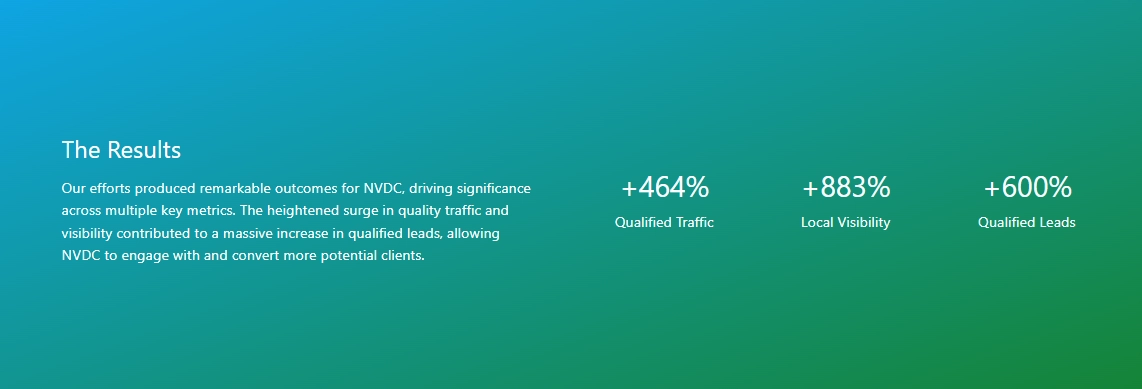
In the case of NVDC Architects, we present the impact of our work using clear, quantifiable metrics. By highlighting key performance indicators, we demonstrate the effectiveness of our strategies, tailored to address their specific challenges.
The Key Takeaways (Optional)
This part is where you sum up the most important lessons or messages from the case study. It highlights what readers should remember and potentially apply to their own situation.
Sometimes, case studies are straightforward enough that the lessons emerge naturally from the story without needing a separate takeaways section. Or, if the case study is very data-heavy or technical, summarising lessons might not add much value. In those cases, ending with results or a strong conclusion may work better.
In short, the key takeaways are a helpful add-on that can reinforce your message, but they are not a must-have. Use them when they clarify or strengthen what you want readers to remember.
When you do include key takeaways, here are some things to emphasise:
- The main problem or challenge the client faced
- How your solution directly addressed that problem
- The most impressive or measurable results achieved
- Any unexpected benefits that came from the solution
- What other businesses can learn from this story
How to Create an Effective Case Study
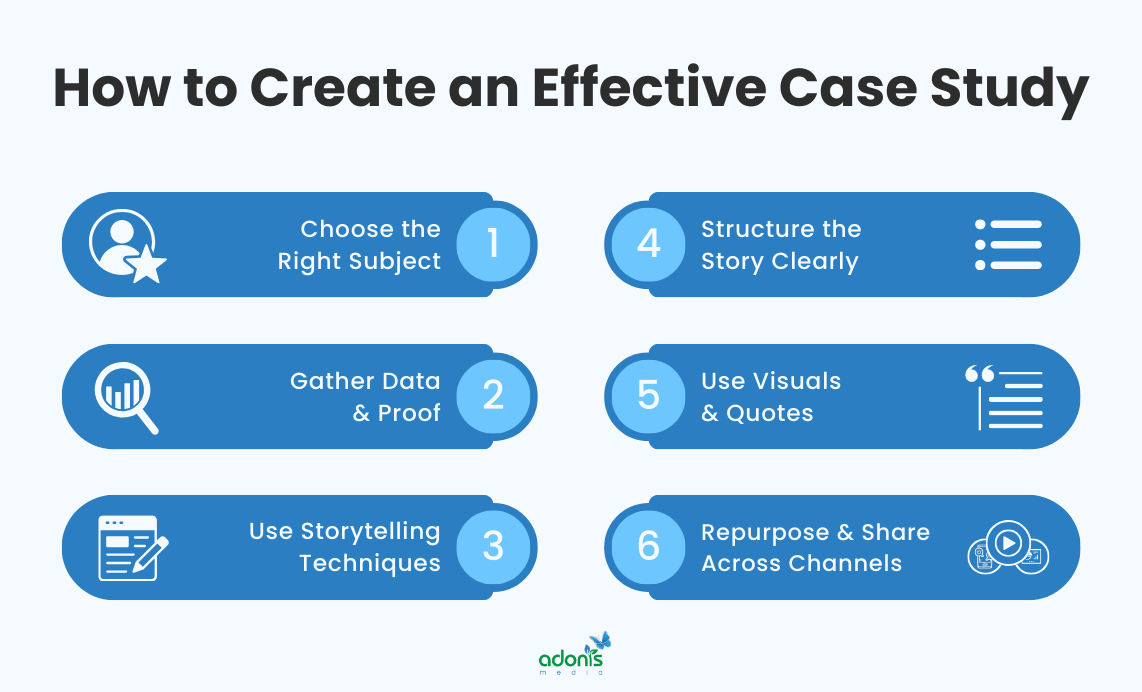
Making a great case study also takes careful planning and clear steps. It's about finding the right story, collecting real evidence, telling it well, and sharing it widely. Let's look at the main steps to create one that works well and stands out.
1. Choose the Right Subject
Choosing the right subject or client is the very first and most important step in creating a case study. As we mentioned earlier, you must pick a client or project that clearly shows how your product or service solves a real problem. The subject should ideally have a positive outcome and be willing to share their experience.
It's best to select a subject that stands out in some way. You don't need to pick a random or average case; the best stories are often those that surprise or teach something new.
However, featuring your personally chosen client is just the start. Get their approval first to make sure they are happy to be featured and understand what the process will involve. It will make the case study creation smoother, especially for the data collection part.
By carefully choosing the right subject, your case study will naturally be more engaging and convincing. It sets the foundation for a story that shows real value.
2. Gather Data and Proof
Once you've picked the subject, the next step is to gather solid data and proof to back up the story. This is what makes your case study trustworthy and powerful, as it's not enough to say the solution worked.
Collecting data usually involves different sources. Interviews with the client are a great way to understand their views and hear direct quotes about their experience. You can also gather documents, reports, or performance metrics that show before-and-after results.
Sometimes, it's helpful to prepare a questionnaire to guide client interviews and make sure you cover all important points. Data is what gives your study credibility and convinces readers that your solution delivers real benefits.
Ultimately, make sure to organise the data well and verify its accuracy. Clear facts and numbers help avoid exaggerations and keep your case study honest.
3. Use Storytelling Techniques
Always present the information in your case study clearly and engagingly, rather than just a list of facts.
Create a flow that guides readers through the client's journey — from the problem they faced, to the solution you provided, and the results that followed. This way, the story feels natural and easy to follow.
Instead of jargon or complex explanations, use plain language that shows why the problem mattered and how your solution made a difference. Use your brand voice as well that resonates well with your target audience.
Key points to aim for:
- Present information logically and clearly
- Use simple, relatable language
- Highlight the process and outcomes
- Keep the tone straightforward and brand-aligned
4. Structure the Story Clearly
Connected to step 3, a clear structure will guide readers to easily follow the case study and understand its message. Most case studies follow the basic structure or anatomy above — starting with an introduction of the client, then the problem, solution, results, and sometimes a conclusion or key takeaways.
It's not that complicated to structure a case study if you follow the said format above and check the image we have created for the anatomy of a great case study.
In addition to the main structure, you may use headings and subheadings for each section to make the case study scannable. Bullets, images, and charts break up long text and help highlight important facts.
Benefits of a clear structure:
- Helps readers find key points quickly
- Shows professionalism and attention to detail
- Makes complex information easier to digest
- Supports SEO by organising content with keywords
- Improves retention, so readers remember the story
5. Use Visuals and Quotes
Visuals and quotes bring your case study to life and make it more engaging to readers. Humans are wired to respond to images and stories from real people, so adding these elements can transform a simple report into a powerful narrative.
You can use photos of the client's team or workplace, screenshots of the product in action, graphs showing key data, or even videos that tell the story in a dynamic way. These visuals make your results clear and memorable by showing, not just telling.
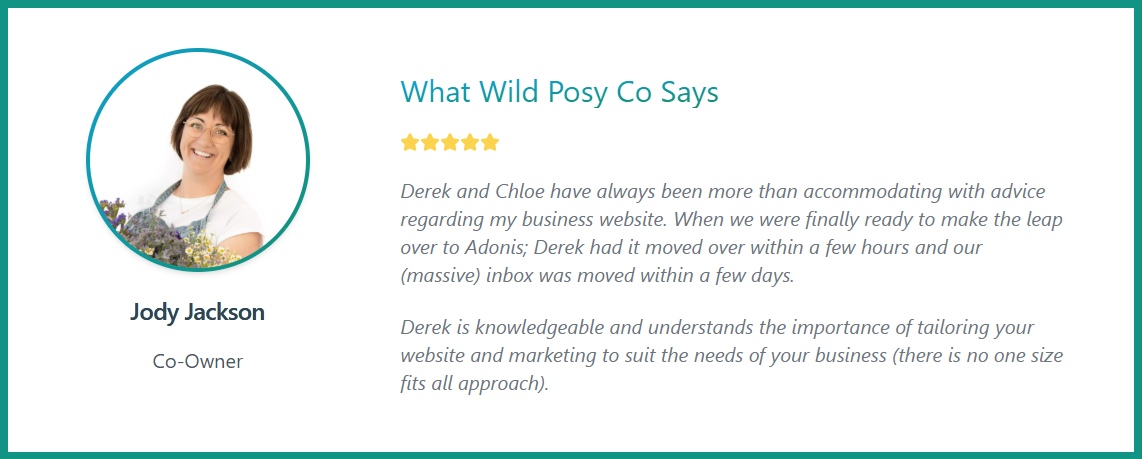 Adonis Media's client testimonial from their case study on long-term client Wild Posy Co. Click here to read more.
Quotes from the client also add authenticity and emotion. Hearing directly from someone involved helps potential customers connect with the story. Quotes can highlight what the client valued most, the challenges they overcame, or how the solution changed their business.
Including the client's name and position will also boost credibility and give a human face to the results.
6. Repurpose and Share Across Channels
After creating a strong case study, it's important to share it widely to get the most value. Repurposing or content repurposing refers to taking the main points from your case study and using them in different formats and channels. It can reach different audiences in the ways they prefer to consume information.
You can turn parts of your case study into blog posts, social media posts, infographics, or short videos. For example, share a quick success story with a compelling caption and image on LinkedIn tailored from one of your case studies.
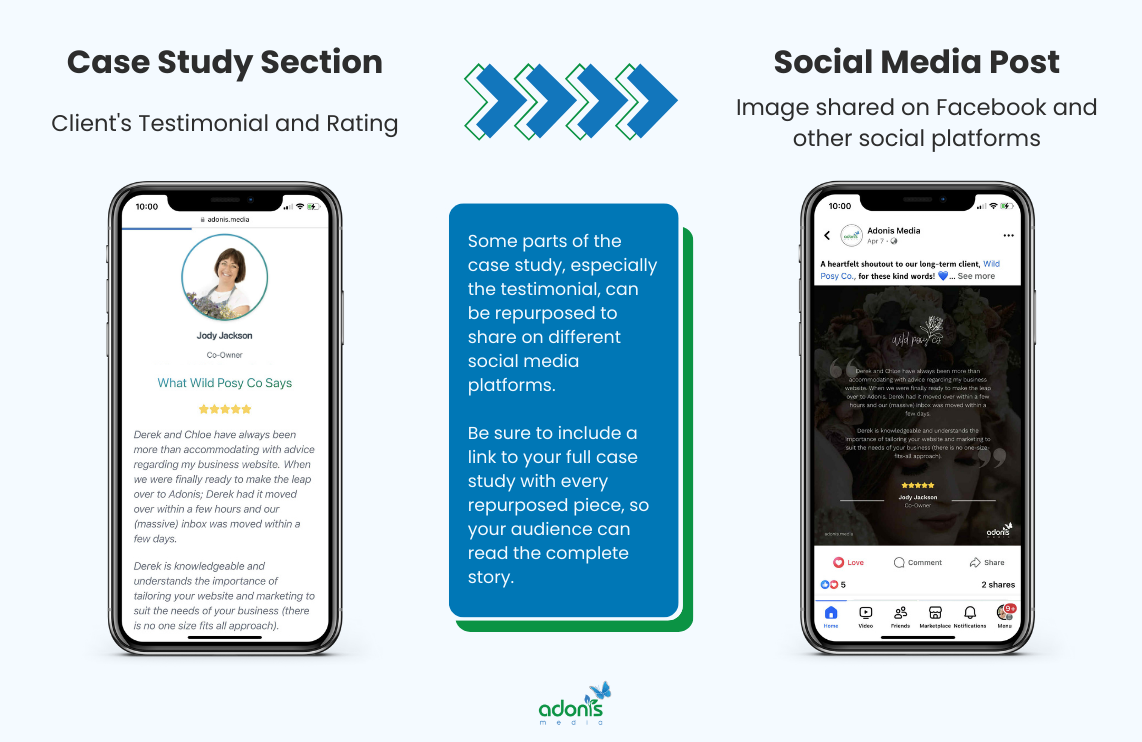
Sharing across multiple channels not only increases visibility but also improves SEO by creating backlinks to your website. It maximises the return on the time spent creating the case study.
Choose channels based on where your target audience spends their time. Keep messaging consistent, but tailor the format and length to fit each platform. Regularly update and promote your case studies to maintain interest.
Further Learning
Looking to learn more? I've collected some fantastic resources that go hand-in-hand with this topic if you want to dive deeper.
- medium.com — Storytelling, not reporting. Engaging case studies with examples
- proposify.com — 8 Long Sales Cycle Causes and How to Overcome Them
- clutch.co — 8 Pillars of Trust: Real-World Examples of B2B Credibility
- youtube.com — LYFE Marketing Channel Video: "8 Real Digital Marketing Case Studies"
Showcasing Your Success Stories
Case studies show your business in action, proving that your solutions work. They can really help your business build confidence by sharing real examples and results. When done right, they make your story stronger and more credible to potential clients.
Focus on honesty and clarity in your case studies. Use real data and genuine client feedback to build trust. Keep your writing simple and direct, so readers easily understand the value you offer.
Want to create case studies that truly impress? Book a free consultation with us today. We'll help you craft compelling stories as a part of your marketing strategy to attract the right customers and grow your business. Let's start your success story now.
Got a question in mind? Check out the FAQs below for quick answers!
