

Marketing is full of big wins and big crashes. A glossy ad can leave people angry, hurt, or laughing at the brand in a matter of hours. Some of the worst flops have come from huge names with serious budgets and smart teams.
Those teams did not wake up and plan to offend people. But small blind spots about race, gender, grief, or money can turn into massive storms once an ad goes live.
The good thing is you can learn from these flops without living them. This blog walks through 10 failed marketing campaigns of all time, breaks down why they went wrong, and turns each one into clear, simple lessons you can use to stress-test your next idea.
Key Takeaways
- Racism, sexism, grief, class, and protest are some of the common blind spots of big brands' marketing campaigns, turning clever ideas into painful, offensive, or mocking campaigns.
- Pepsi's Kendall Jenner and 'Number Fever' cases show how using protests or high-stakes promos without care can spark backlash.
- New Coke, Peloton's Christmas ad, and Burger King's tweet show you cannot ignore emotions, habits, or power dynamics in campaigns.
- Dove, Sony's PSP billboard, and Heineken's 'Lighter Is Better' ad highlight how race, skin tone, and history must shape creative checks.
- Hyundai's 'Suicide' ad and McDonald's 'Dead Dad' spot show mental health and grief should never be cheap emotional shortcuts in ads.
- Across all 10 campaigns, poor testing, narrow teams, and slow crisis responses make 'That was not the intent' meaningless.
Why Even Big Brands Still Get It Wrong
 Image: @pexels via canva.com
Big brands have money, data, and huge teams. However, they still mess up sometimes because they miss or overlook basic human things like respect, context, and real-life experience.
Even large marketing teams can end up in a bubble. People in the room may share a similar background, so ideas sound fine inside the office but feel hurtful or strange once they reach real people. Pressure to stand out can also push teams toward shocking or edgy ideas that have not been fully thought through.
Some big topics and issues that brands still overlook include:
- Racism and colourism, when race or skin tone is used in lazy, harmful, or thoughtless ways.
- Sexism and gender roles, such as jokes about women, bodies, or old-fashioned roles at home or at work.
- Grief, trauma, and mental health, when things like death or suicide are used as quick emotional hooks.
- Class and money, where ads seem to laugh at people with less, or show rich lifestyles as the only 'normal' life.
- Protest and real-world pain, when brands copy the look of protests or social movements to sell products.
Marketers who forget these areas often say the same thing later: 'That was not the intent.' But what people feel when they see the ad matters more than the private intent behind it. A simple way to lower risk is to get honest feedback from diverse people outside the main team before anything goes live.
Want to see what this looks like in real life? Read through the 10 failed marketing campaigns below and use their mistakes to stress-test your next idea before you hit publish.
1. Pepsi's Kendall Jenner Ad
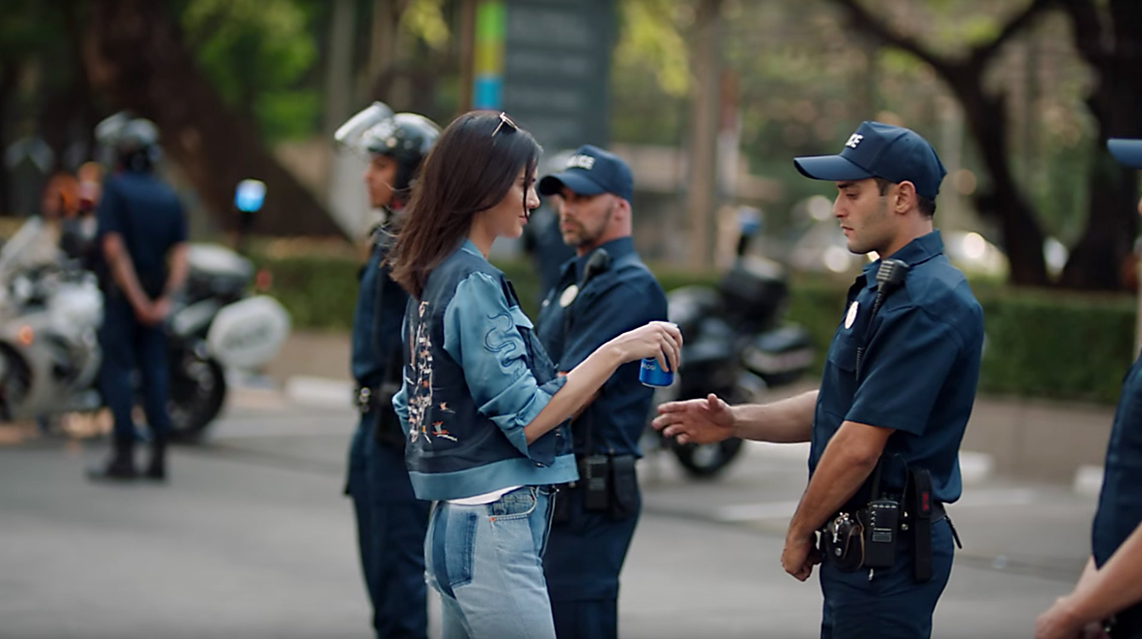 Kendall Jenner's controversial Pepsi protest ad that sparked brand activism debates. Watch the full commercial here. Image credits: nytimes.com
This is one of the clearest examples of how a big brand can misread the room. It was part of Pepsi's 'Live for Now' campaign and first appeared in April 2017.
In the ad, Kendall Jenner leaves a fashion photo shoot and joins a street protest, where smiling young people hold vague peace-and-love signs. The march reaches a police line, and Kendall walks up to an officer and hands him a can of Pepsi. He takes a sip, smiles, and the crowd celebrates as if the drink has solved the tension.
The setting and visuals clearly echo real protest movements, especially Black Lives Matter, but the conflict ends not with real change, just a soft drink. Pepsi wanted to show unity and peace, but the story made it look like serious issues could be fixed with a quick product moment.
How It Backfired and The Takeaway
The ad was slammed for being tone-deaf because it used protest imagery and Black Lives Matter-style scenes to sell a fizzy drink.
Many people felt it treated real pain, risk, and activism like a fun backdrop for a brand and a famous model with no strong ties to social justice work. Social media backlash was huge, and Pepsi pulled the ad within about a day and issued a public apology.
It also showed a weak review process: this kind of script should have been checked by diverse teams and tested with real people before launch.
For marketers, there are a few clear lessons:
- Do not use serious social issues as a simple backdrop unless your brand has real history, action, and partners in that space.
- Sense-check tone and timing with diverse, honest reviewers who can tell you if something feels off or offensive.
- When you work with big influencers, make sure they genuinely fit the message and cause.
2. Coca-Cola's 'New Coke'
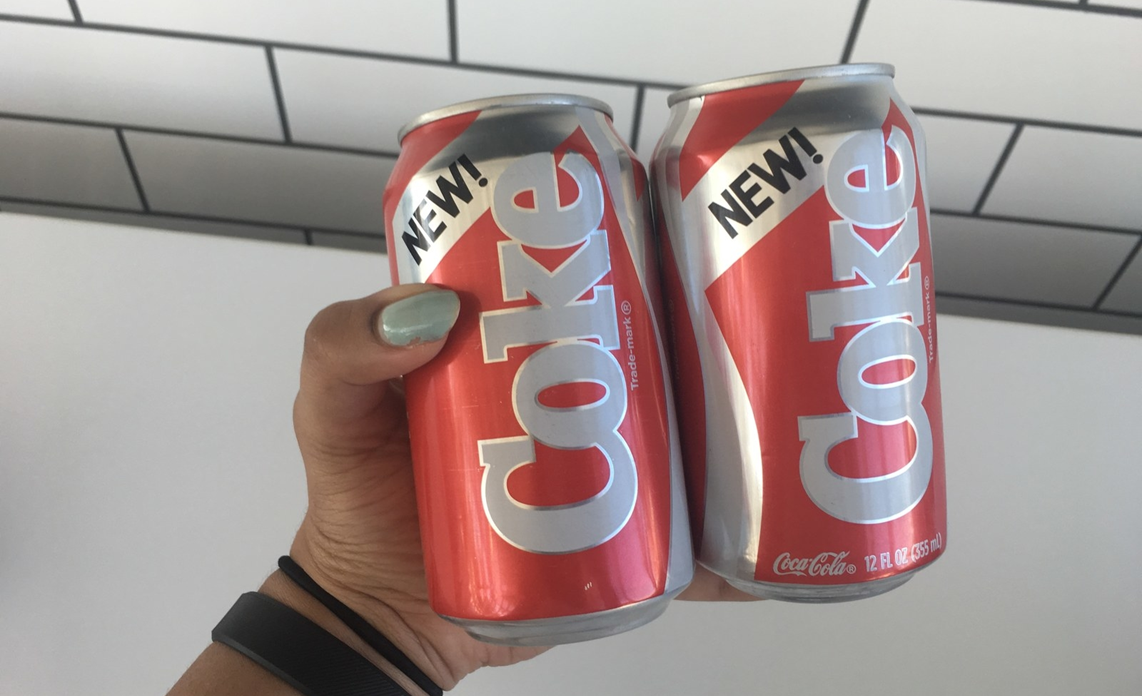 New Coke's 1980s flavor comeback put to the test. Watch the original 1985 New Coke commercial here. Image credits: buzzfeed.com
New Coke was Coca-Cola's big attempt to change its classic drink recipe in 1985. The company had seen taste tests where people chose a sweeter cola over the original, so they decided to launch a new, smoother formula and make it the main Coke on shelves.
Coca-Cola announced the change with confident press events and upbeat ads, and stopped making the original formula in the US. The plan was to keep the new recipe as the only version, not just a limited trial. The company believed people would follow the taste tests and accept the swap because the drink was perceived as "better" in blind tests.
But the brand's emotional side was largely ignored. For many fans, Coke was part of habits, memories, and identity, not just a sweet drink. As soon as people realised the old taste had gone, phone lines and letters poured in, and protest groups formed, asking for the original Coke to be brought back.
How It Backfired and The Takeaway
The main problem was not the new flavour itself but the decision to replace the old one completely. Loyal customers felt ignored and betrayed, as if a piece of their daily life had been taken away without their voice being heard.
The backlash grew so strong that, within a few months, Coca-Cola brought back the original recipe as "Coca-Cola Classic" while still selling New Coke in some form for a while.
This made it clear that brand meaning and tradition can matter more than a small taste 'improvement'. It also showed how risky it is to change a beloved product without a careful plan and clear communication.
For marketers, there are a few clear lessons:
- Do not remove a loved product overnight without a careful transition and clear options for loyal users.
- Look beyond and study the emotional role your product plays in people's lives.
- When changing a core product, consider safer steps like limited runs, side-by-side versions, or clear "new" labels before making a full switch.
3. Burger King's 'Women Belong In The Kitchen' Tweet
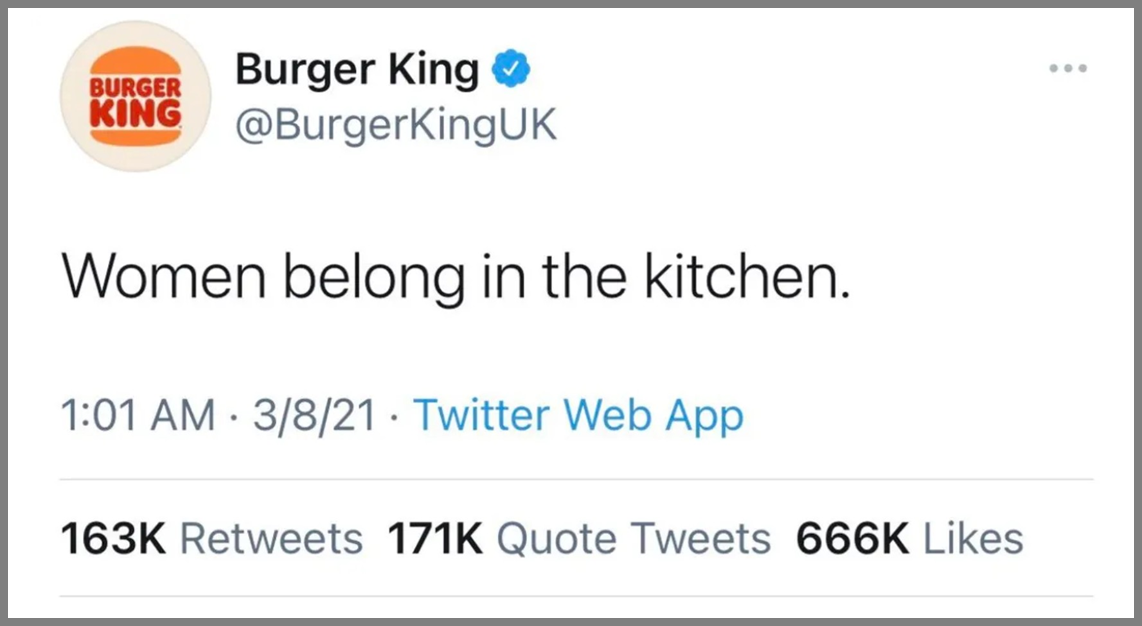 Burger King UK's infamous tweet that backfired on International Women's Day. Image credits: siteimprove.com
On International Women's Day in March 2021, Burger King UK posted a tweet that simply said: 'Women belong in the kitchen'. The tweet was meant to grab attention and was part of a wider campaign about women in professional chef roles.
In follow-up posts and in a longer ad, the brand said it wanted to highlight that very few head chefs are women and to promote a new scholarship to support female Burger King staff in culinary school. The idea on paper was to talk about gender gaps in kitchens and show that the brand wanted to help change that.
The problem was that the first tweet stood alone on many feeds, with no context and no explanation underneath in screenshots and headlines. Many people only saw the sexist phrase, not the planned positive message, and the line spread quickly across social media.
How It Backfired and The Takeaway
The tweet was slammed for using a sexist stereotype as clickbait, especially on a day meant to celebrate women. Critics said the brand tried to be edgy and playful, but instead repeated a harmful line that has been used to belittle women for years.
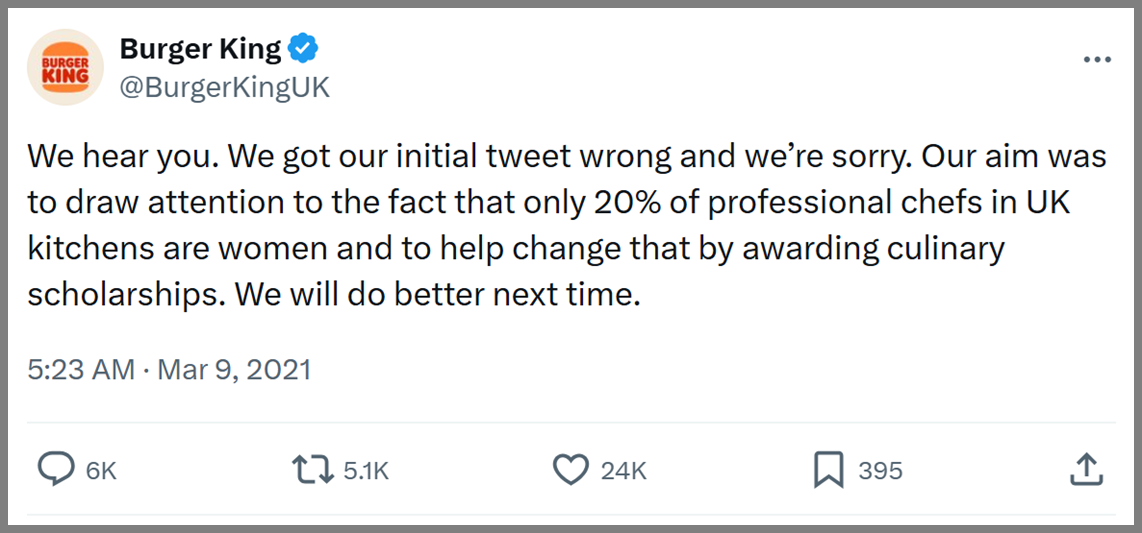 Burger King UK's follow-up apology tweet acknowledging their misstep. Read the full tweet here.
Burger King deleted the tweet and apologised, saying the wording was wrong and overshadowed the scholarship idea. The outrage showed how fast a single line on social media can trigger a crisis and how context in a thread is not enough when the first message alone is offensive.
For marketers, there are a few clear lessons:
- Do not lead with a harmful stereotype, even as a 'hook', as people may only see that part.
- Check bold copy with diverse team members and ask how it will look in a screenshot on its own.
- When supporting a cause, let respect and clarity come first, and let the smart idea follow.
4. Pepsi's 'Number Fever' in the Philippines
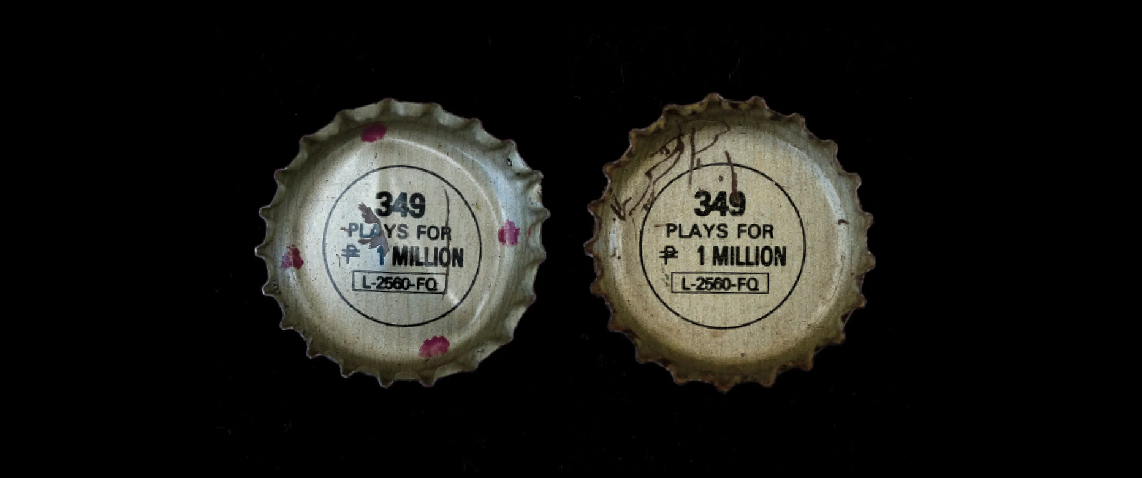 Pepsi's "349" bottle-cap promo in the Philippines. Watch the TV commercials here. Image credits: bloomberg.com
In 1992, Pepsi ran a big promotion called 'Number Fever' in the Philippines to grow its market share against Coca-Cola. Bottle caps from Pepsi and partner brands had three-digit numbers inside, and people could win cash prizes if their number matched the one announced on TV news. The top prize was 1 million pesos, which was life-changing money for many families at the time.
The campaign worked at first. Sales jumped, and Pepsi's market share in the country rose from under 20% to around a quarter of the market while the promotion ran. Thousands of people won smaller prizes, and the brand stayed in the news every day.
Problems began after 349 was named as a winning number, but a printing mistake put 349 on more than half a million caps. Many people believed they had won the prize, and crowds rushed to Pepsi plants and offices to claim payouts that would have cost the company far more than it had budgeted.
How It Backfired and The Takeaway
Pepsi said only caps with a matching security code would be paid and offered a much smaller goodwill payment to the other 349 holders, which many refused. Anger grew into protests, boycotts, and violent incidents, including attacks on Pepsi trucks and facilities and tragic deaths linked to homemade explosives near company sites.
The biggest issues were poor control over the promotion print run, unclear rules in the eyes of the public, and slow crisis handling once the error hit. What began as a clever sales push turned into a long-term reputation problem, and the word '349' even became linked with feeling cheated.
For marketers, there are a few clear lessons:
- Double-check every technical and production step in promotions where money or prizes are on the line.
- Write promotion rules in clear language and plan in advance how to respond if confusion or errors happen.
- Look beyond sales spikes and always protect brand trust.
5. Dove Body Wash Ad
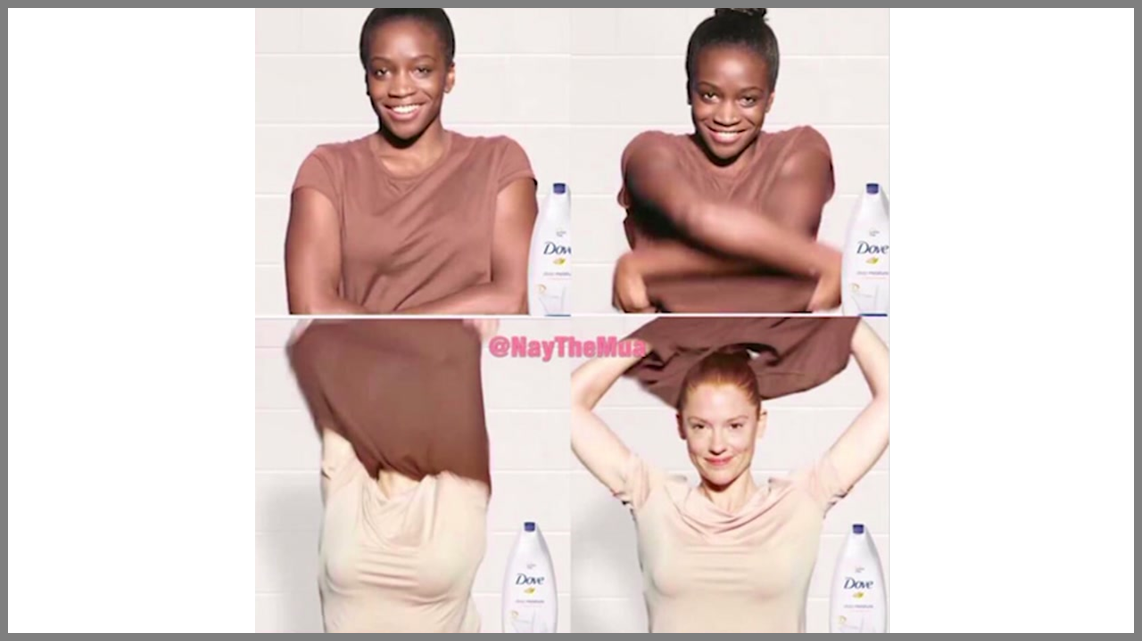 Dove's viral body wash GIF that drew backlash for its racially insensitive transformation. Watch the full ad here. Image credits: abc7ny.com
In 2017, Dove ran a short body wash ad on Facebook that showed a black woman taking off a brown top to reveal a white woman in a light top underneath. In the full clip, the white woman then lifted her top to reveal another woman of colour, so the idea was to show different skin tones.
Dove said the ad was meant to show that its body wash was for every woman and to celebrate diversity. It was part of a wider push linked to the brand's 'Real Beauty' positioning, which tries to talk about real women and real bodies rather than narrow beauty ideals.
The problem was that many people only saw the image of what looked like a black woman turning into a white woman after using the product. That single frame spread quickly online and carried a very different message from what the brand said it wanted to express.
How It Backfired and The Takeaway
The ad triggered strong backlash because it echoed a long and ugly history of soap ads that showed black people becoming white after washing. Viewers and campaigners called it racially insensitive and said it suggested lighter skin was the 'after' state, even if that was not the brand's goal.
Dove pulled the ad, apologised, and said it had 'missed the mark' in how it showed women of colour. Brand trackers later showed a clear drop in how people viewed Dove after the incident, which was painful for a company that had spent years linking itself to body confidence and inclusion.
For marketers, there are a few clear lessons:
- Review visuals through the lens of history and how different groups might read them, not just what the team meant.
- Test creative with diverse audiences and listen if they flag confusing messages.
- If your brand stands for inclusion, make sure your process, team, and final checks truly match that promise.
6. Hyundai's 'Suicide' Ad
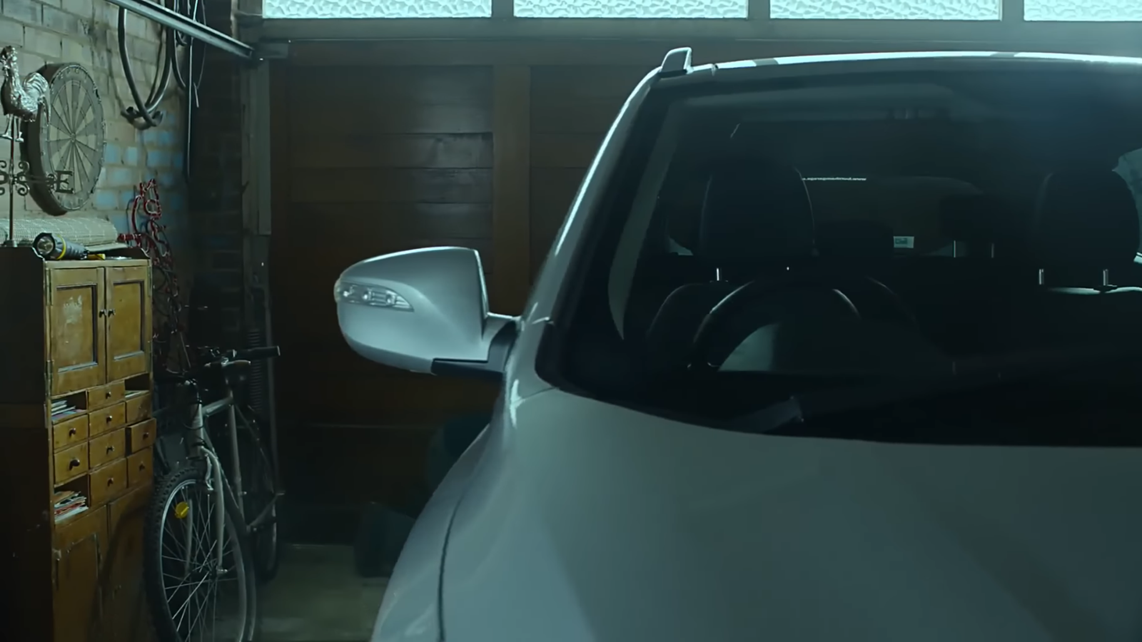 A screenshot from Hyundai's Pipe Job ad that was heavily criticized for its insensitive depiction of suicide. Watch the full commercial here.
In 2013, a video ad for the Hyundai ix35 showed a man parking his car in a closed garage and setting up a hose from the exhaust into the cabin. This makes it clear he is trying to end his life using fumes from the car.
After some time passes, the man is shown still alive, stepping out of the garage looking puzzled, because the car's exhaust is described as having '100% water emissions'. A closing line highlights the clean emission technology as the key feature of the vehicle.
The ad ran online in the UK and Europe and was created by Hyundai's in-house agency, Innocean Europe, as a viral spot. It was not widely aired on TV, but spread quickly on the internet once people started reacting to the theme.
How It Backfired and The Takeaway
The ad drew strong criticism for using an attempted suicide as a joke to sell a car, especially from people who had lost loved ones to similar methods. A powerful open letter from a woman whose father died by suicide in a car garage helped the story gain global attention and underlined how painful the ad felt for many viewers.
Hyundai and Innocean apologised, pulled the video, and said it did not reflect the company's values and had not been approved for full use. The backlash showed how trying to be darkly humorous or 'shocking' around mental health can damage brand image instead of making a clever point about product benefits.
For marketers, there are a few clear lessons:
- Never use suicide, self-harm, or similar trauma as a storytelling tool to highlight product features.
- Test creativity with people outside the core team who can flag when an idea crosses a basic line of care and respect.
- Plan in advance so you can respond quickly and with empathy if an ad hurts people.
7. Sony PSP 'White Is Coming' Billboard
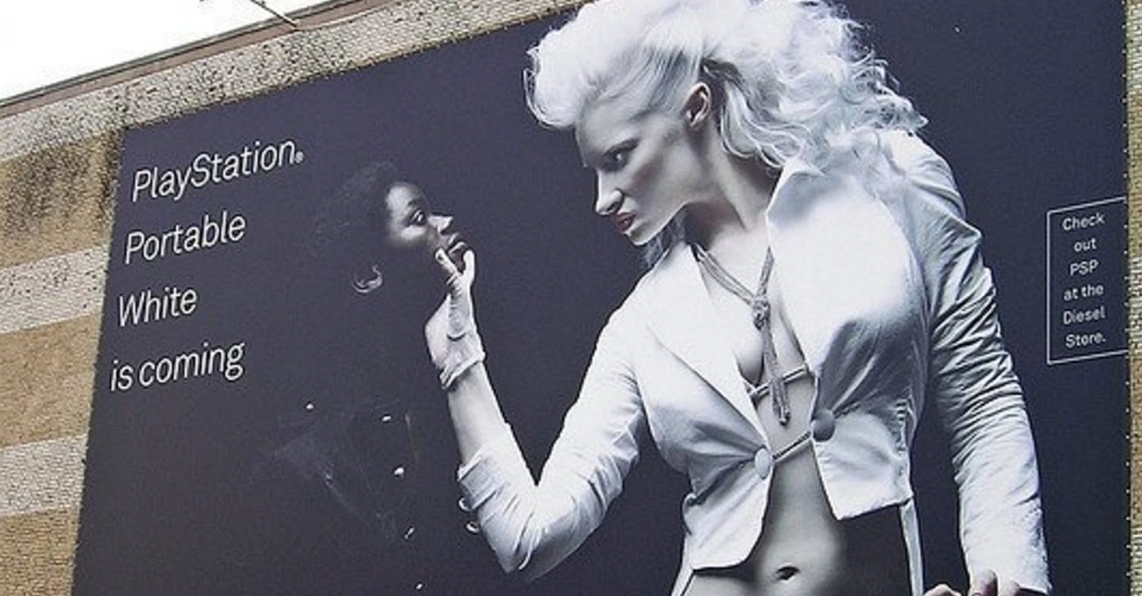 Sony's PSP "White is coming" billboard that was slammed for racist imagery. Image credits: medium.com
In 2006, Sony ran a billboard campaign in the Netherlands to promote a new ceramic white version of its PlayStation Portable (PSP).
The headline on the billboard read 'PlayStation Portable White is coming', placed right beside the image of the white woman holding the black woman in a firm, dominant pose. Other images in the campaign showed the two models in different stances, but this one became the focus online and in the press.
Sony said the idea was to show the contrast between the older black PSP and the new white PSP through strong visuals of black and white. But once photos of the billboard spread outside the Netherlands, many people saw a racially charged power image instead.
How It Backfired and The Takeaway
It was quickly criticised for looking like it celebrated white dominance over Black people, because of the body language and the line 'White is coming'. Civil rights groups and politicians in the US and elsewhere called the image racist and said it echoed older, harmful depictions of race in the media.
Sony pulled the billboards, removed the image from its Dutch website, and apologised to anyone offended, saying there was no racist intent. Still, the damage was done, and the PSP launch ended up linked to a global debate about race instead of just a product colour update.
For marketers, there are a few clear lessons:
- Do not rely only on 'clever' visual contrast when it can also look like one group overpowering another.
- Stress-test bold creative with diverse people in different countries before it goes live.
- Think about how a single image will be read online, out of context, especially when it uses race, gender, or power cues.
8. Peloton Christmas Ad
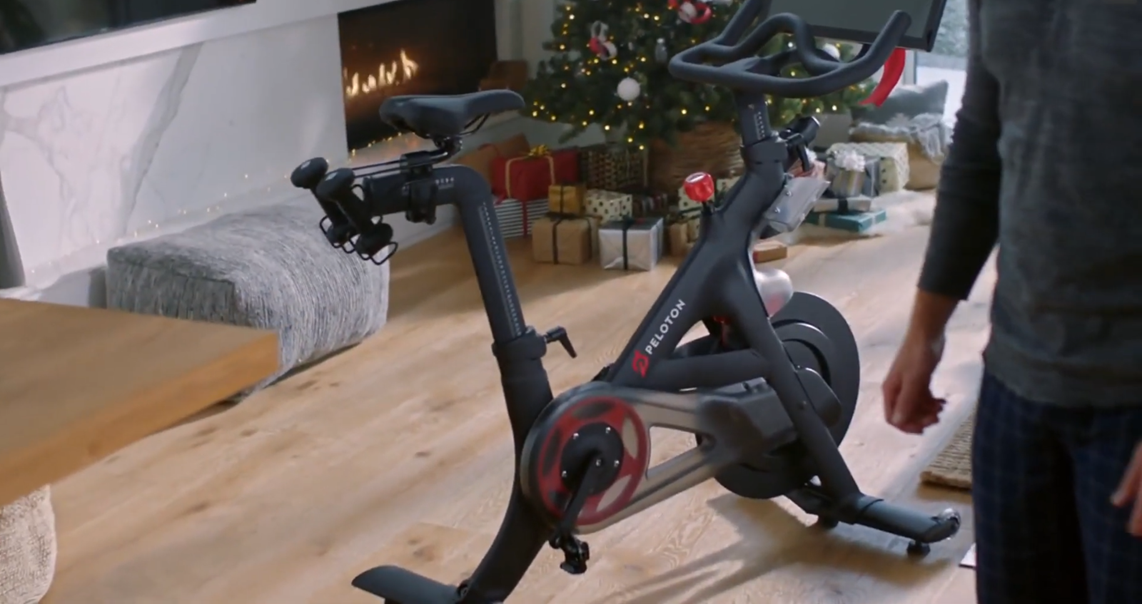 A screenshot from Peloton's holiday ad, widely mocked for its portrayal of fitness and relationships. Watch the full commercial here.
In late 2019, Peloton released a Christmas TV ad called 'The Gift That Gives Back'. In the 30-second spot, a husband surprises his already slim wife with a Peloton bike on Christmas morning, and she starts filming her workouts on her phone.
The ad then jumps through clips of her riding the bike over a year, often looking nervous or eager to do well, before she plays the video back to her husband as a 'thank you' for the life-changing gift.
The tone is meant to feel like a proud personal journey, with the brand message that Peloton has helped her grow and become more confident. That said, many viewers read the story very differently once the ad hit social media.
How It Backfired and The Takeaway
The ad was dragged online as 'sexist', 'creepy', and 'classist', with many people saying it looked like a rich husband buying his already thin wife an expensive bike to fix her body or keep her in shape. Others said the wife in the video looked scared and desperate for approval.
The backlash turned into jokes, parodies, and a wave of memes, and Peloton's share price dropped sharply in the days after the ad went viral for the wrong reasons.
Peloton responded by saying the ad was misunderstood and meant to show one woman's positive experience, but by then the internet had already written its own story about the brand.
For marketers, there are a few clear lessons:
- Always think about how your ad appears to the viewer.
- Be careful with power dynamics in stories, such as gifts about bodies, weight, or status between partners.
- Watch early reactions closely and be ready to respond with clear, human messages if people feel uneasy or mocked.
9. Heineken's 'Lighter Is Better' Ad
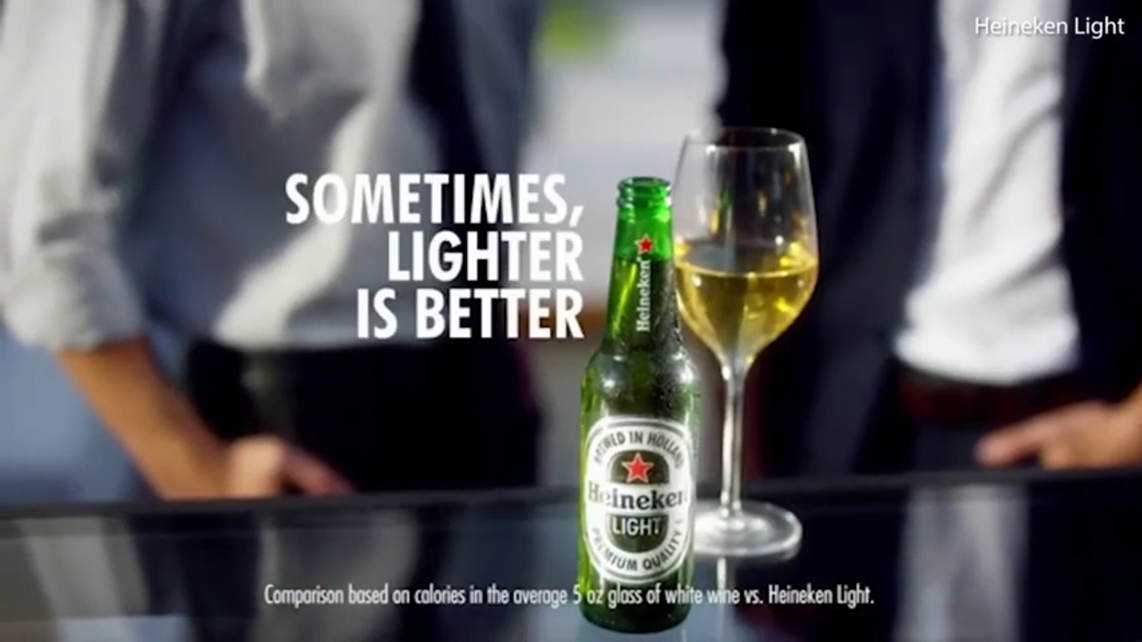 A screenshot from Heineken's controversial ad. Watch the full commercial here (image appears blurry as it's taken from an old video).
In 2018, Heineken ran a TV ad for Heineken Light that used the line 'Sometimes, lighter is better'. In the 30-second spot, a bartender sees a woman at the far end of the bar looking unhappy with her glass of wine and decides to slide her a bottle of Heineken Light.
The beer bottle travels along the bar and past several people with darker skin tones, including Black customers, before it reaches the lighter-skinned woman. As she picks up the bottle, the tagline appears on screen, linking the word 'lighter' to both the beer and what viewers could also read as skin tone.
The ad was part of a wider 'Lighter is Better' push for the low-calorie beer and ran in markets including the US, Australia, and New Zealand. It stayed on air until social media users, including musician Chance the Rapper, began calling it 'terribly racist'.
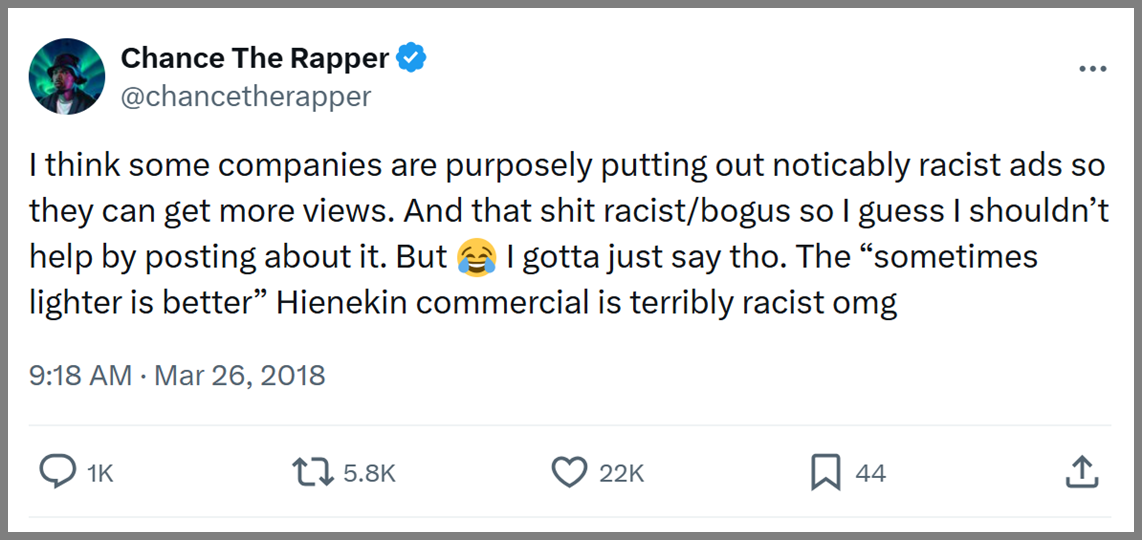 Chance the Rapper calling out Heineken's commercial as blatantly racist. Read the full tweet here.
How It Backfired and The Takeaway
Many people said the ad sent the message that 'lighter is better' not just for beer but also for skin colour, because the drink skipped three darker-skinned people and ended in front of a lighter-skinned woman.
For viewers aware of colourism and the long history of lighter skin being treated as superior, the pairing of visuals and slogan felt careless and harmful.
Heineken pulled the ad and admitted it had missed the mark. The case still raised a big question: how a global brand with a long record of inclusive ads let a spot through that could be read so easily as praising lighter skin.
For marketers, there are a few clear lessons:
- Check how your slogan sounds when paired with your visuals.
- Bring people with different backgrounds into the review process so they can flag issues linked to history and lived experience.
- Act fast, be clear, and show you are learning when people point out real harm in your ad, rather than blaming them for 'misunderstanding'.
10. McDonald's 'Dead Dad' TV Ad
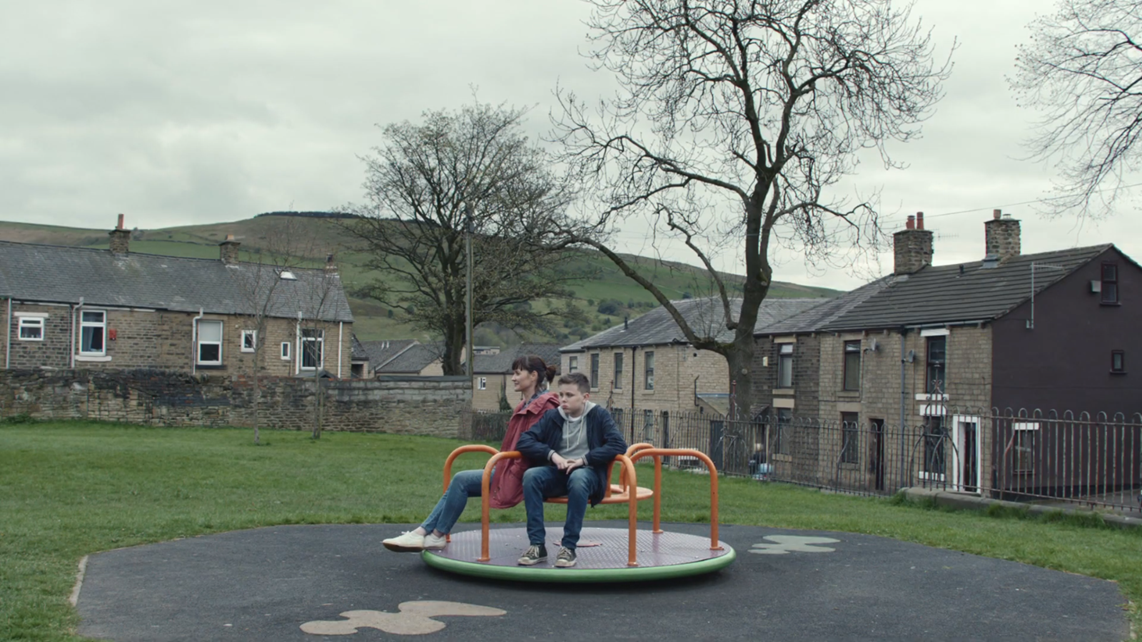 McDonald's UK "Dad" ad, condemned for exploiting a boy's grief over his late father to sell Filet-O-Fish. Watch the full commercial here.
In 2017, McDonald's UK ran a TV ad simply called 'Dad', built around a young boy who never knew his late father. As he walks through town with his mum, he asks her what his dad was like, and each memory she shares seems to show how different the boy is from him.
Near the end of the ad, they go into a McDonald's, and the boy orders a Filet-O-Fish. His mum smiles and tells him that was his dad's favourite too, and the moment is framed as the one thing the boy and his father share.
The spot was meant to be heartwarming and show McDonald's as part of everyday family life. Instead, many viewers focused on the way a child's grief was used to highlight a specific menu item.
How It Backfired and The Takeaway
Bereavement charities and many parents said the ad felt like it was exploiting childhood loss to sell fast food. Some families with bereaved children reported that the storyline was upsetting, especially seeing grief wrapped up so neatly with a fish burger as the final 'comfort'.
McDonald's first defended the idea but, after more than 100 complaints and heavy media criticism, pulled the ad from TV and cinema and apologised. The company also said it would review its creative process, which shows how quickly emotional storytelling can cross the line when the brand benefit feels too forced.
For marketers, there are a few clear lessons:
- Treat topics like death and grief with extra care, and ask if they truly belong in a sales message.
- Check whether the emotional heart of your story is about people, not just a product reveal at the end.
- Build clear red lines for sensitive themes in your brand guidelines, so teams know what is never OK to use in ads.
Avoiding Your Own Marketing Misfire
Great marketing is not just about clever ideas or bold visuals. It is about how real people feel when they see your work and whether they trust you more afterwards. If your campaign hurts, belittles, or confuses people, it is not working, no matter how smart it looks on a slide.
One simple way to stay safer is to build in a pause before launch. Show your concept to a mix of people, listen closely to any discomfort, and be ready to change course. It is better to fix a problem in draft than to fix a crisis in public.
If you want help stress-testing your next campaign and spotting risks before they go live, book a free consultation with our team. We can walk through your ideas together, flag possible issues, and turn them into clear, respectful stories your audience can trust.
Got a question in mind? Check out the FAQs below for quick answers!
