Most brands run ads. Very few run campaigns people quote, share, and still talk about years later. The gap between those two is huge, and it is where real growth, brand love, and long-term trust usually live.
The hard part is this: most teams are busy chasing quick wins. Another sale. Another post. Another short campaign that looks fine on a slide but never really lands with real people. When that happens, your brand turns into background noise, easy to skip, mute, or forget the second the ad ends.
This article breaks down 10 marketing campaigns that did the opposite. You will see how they grabbed attention, stuck in culture, and still teach lessons today, plus clear takeaways you can use to shape your next campaign.
Key Takeaways
- Some campaigns stay famous because they tap deep emotions with very simple stories, so people remember the feeling more than the ad.
- Brands like McDonald's and Nike show how short taglines plus feelings can rebuild trust and long-term brand strength.
- The ALS charity challenge shows that simple, fun actions, public dares, and a real cause can motivate people to join.
- Old Spice and KFC show how humour and a human voice can refresh a brand and calm anger during awkward or crisis moments.
- Pepsi's taste tests, Spotify's yearly recaps, and Coca-Cola's named bottles turn behaviour into experiences people try, talk about, and share.
- Dove and Apple highlight how picking a real tension and a belief can power campaigns that run for years.
- Across all 10 campaigns, the winners focus on one strong idea, repeat it across channels, and keep listening so people feel seen and valued.
Why These Campaigns Still Get Talked About
 Image: @atlasstudio via canva.com
It's impossible you don't know about one of these marketing campaigns.
These campaigns tap into simple human feelings first, and tactics second. They make people feel something clear and strong, like pride, joy, hope, belonging, or even a bit of shock. When a message hits that emotional level, people remember the feeling long after they forget the exact ad.
They also tell a small, focused story instead of trying to say everything at once. There is usually one clear idea at the centre, repeated in different ways over time. That consistency helps the campaign grow, carry across channels, and turn into a habit in the audience's mind.
Many of the ideas behind these campaigns show up again and again in how industry giants plan their work:
- Turning customer data or behaviour into fun, personal stories people want to share.
- Taking a clear stand on a real-world issue that matters to their audience.
- Owning a simple, repeatable line or message that can last for years.
- Turning product tests, stunts, or challenges into things people can try themselves.
- Making the everyday buyer feel like the hero, not the brand.
If these points sound exciting, keep reading on to see the 10 specific campaigns and how each one brings these ideas to life in its own way.
1. McDonald's 'I'm Lovin' It'
 An AI-enhanced screenshot from McDonald's first "I'm Lovin' It" ads. Watch the full commercial here.
McDonald's launched "I'm Lovin' It" in 2003 as a global branding push at a time when sales and brand love were slipping. The company wanted to feel relevant again to younger people, so it used a single slogan and jingle across more than 100 countries, tying together TV ads, packaging, store signs, and later digital channels.
The ads did not talk about price or speed as much as mood. They showed people hanging out, laughing, dancing, and yes, sometimes eating fries. The focus was on joy in everyday moments, with the food slipping into the scene instead of being the only star.
The "ba da ba ba ba" hook, recorded by Justin Timberlake from a jingle written with Pharrell Williams and others, ran as both a pop track and an ad sound logo, making the line easy to sing and hard to forget.
Why It Stood Out and The Takeaway
The campaign felt fresh because it sold a feeling, not just fast food. Instead of lecturing people about value, it tapped into simple happiness, social time, and comfort, which made the brand feel warmer and more human.
It stuck in memory thanks to clear audio branding. The jingle became a kind of shortcut in people's heads: hear the notes, and you instantly picture the golden arches, fries, and quick treats, which helped the brand rebuild relevance and boost sales after launch.
What this campaign teaches us:
- Anchor your message in a simple emotion people already feel about your product, like comfort, joy, or pride.
- Use a repeatable asset (like a sound, colour, or visual) across all channels so people recognise you fast.
- Let creative partners (musicians, influencers, or creators) help carry your message into culture, not just into ads.
- Track how people respond, not only with sales but with recall and brand feeling.
2. ALS Ice Bucket Challenge
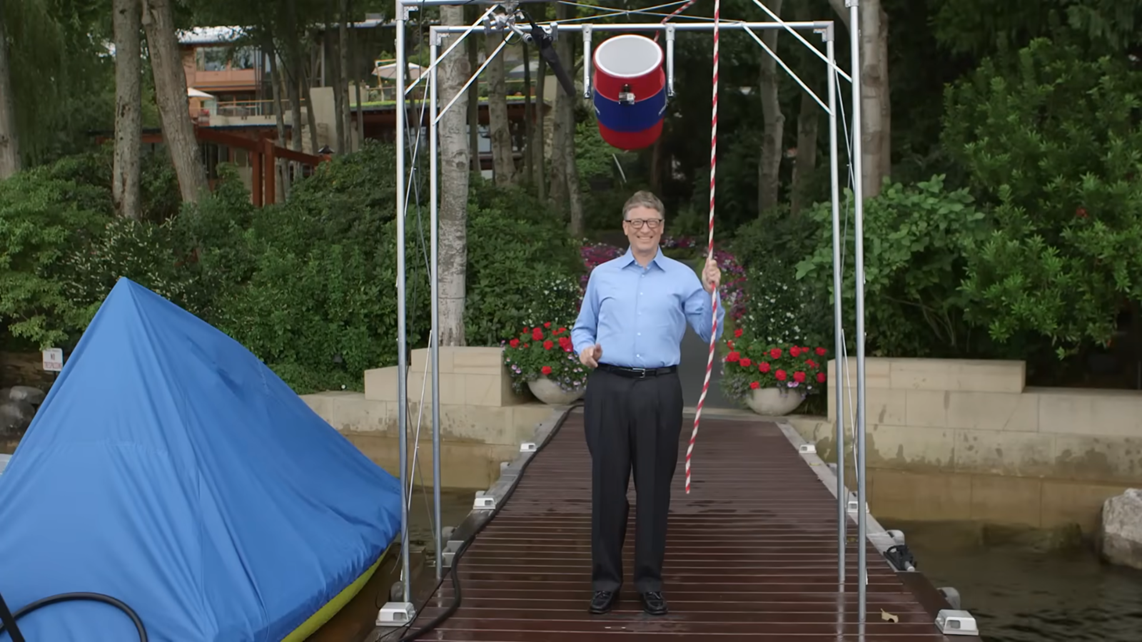 A screenshot from Bill Gates' ALS Ice Bucket Challenge video. Watch the full video here.
In summer 2014, the ALS Ice Bucket Challenge spread across Facebook, Instagram, and YouTube as people filmed themselves pouring ice water over their heads. After doing it, they called out friends to do the same within 24 hours or donate to an ALS charity, often doing both.
It started with people close to ALS and quickly turned into a chain of public dares, helped by the simple rule of filming, posting, and tagging others. Celebrities, CEOs, and everyday users joined in, which pulled the challenge into news shows and mainstream media.
By the end of 2014, millions of videos had been posted, and the ALS Association alone reported over 17 million participants and more than $115 million raised in that summer period. The campaign also made ALS a topic many people heard about for the first time, not just a short-term trend.
Why It Stood Out and The Takeaway
The challenge worked as it was easy, playful, and public. A bucket of ice water was cheap and simple, but still dramatic enough to feel bold on camera, which made people want to join in and share their own clip.
It also hit the sweet spot for social media. The task was visual, short, and built for mobile video, and the #IceBucketChallenge hashtag made it easy to follow the trend and feel part of something bigger. The mix of humour, empathy, and a clear call to donate turned it from a random stunt into a massive awareness campaign for a cause that had been mostly unknown.
What this campaign teaches us:
- Make the action simple, cheap, and clear so almost anyone can join in without much effort.
- Tie the fun to a real cause or story so people feel their effort has a deep meaning.
- Look for unique or innovative ways to involve influencers or community leaders so they help spark the next wave of attention.
3. Old Spice's 'The Man Your Man Could Smell Like'
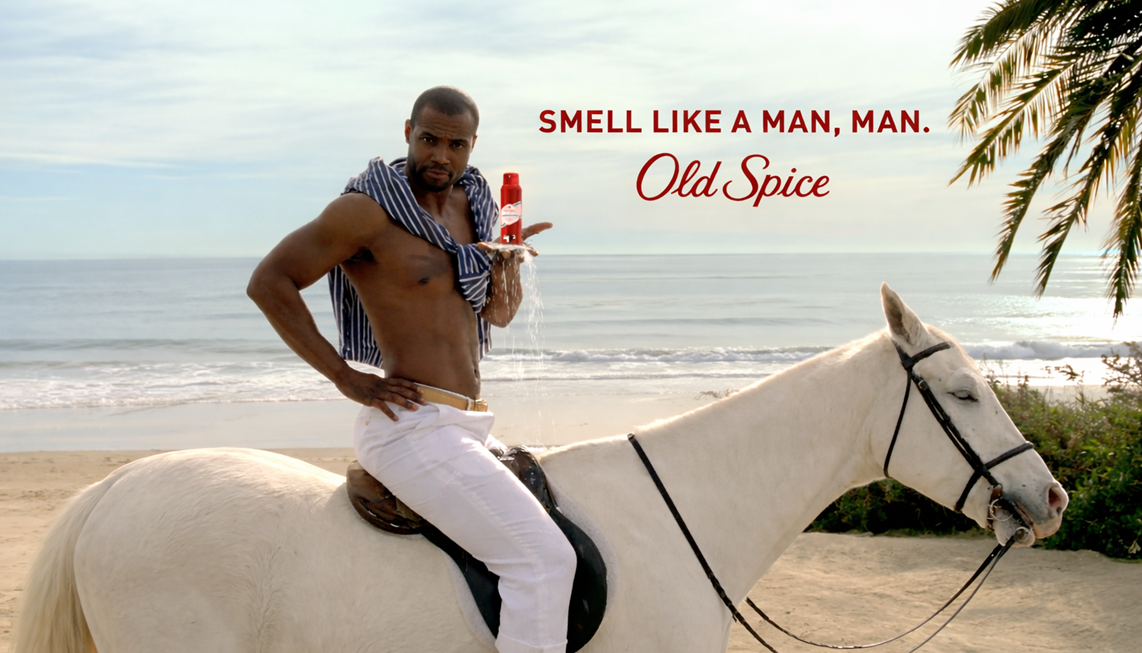 A screenshot from Old Spice's iconic "The Man Your Man Could Smell Like" ad. Watch the full re-released commercial here.
In 2010, Old Spice launched a TV ad starring actor Isaiah Mustafa talking straight to the camera in one long, smooth shot.
He moved from a bathroom to a boat to a horse, all in under 30 seconds, with quick scene changes and surreal jokes. The ad ended with the line "I'm on a horse", which made it even more shareable and quotable.
The spot spoke mainly to women, not just men. The script teased the idea that their partners would smell more attractive if they used Old Spice shower gel, all while making fun of typical "tough guy" ads. Later on, this helped the brand stand out in a crowded aisle of similar products.
After the first ad went viral, they followed up with a wave of personalised response videos. They replied in character to fans, brands, and even celebrities on YouTube and social platforms, which made people feel like they were part of the joke.
Why It Stood Out and The Takeaway
The campaign landed because it mixed sharp humour with a very clear product link. The ad moved fast, used weird but memorable scenes, and tied every joke back to scent, confidence, and the bottle in his hand, so people laughed but also remembered what was being sold.
The personalised follow-up videos helped the campaign live far beyond TV. By answering real comments in near real time, Old Spice turned a one-way ad into a two-way conversation that felt fresh and personal, which boosted views, brand searches, and sales.
What this campaign teaches us:
- Use humour that still links clearly back to your product and main benefit.
- Pick a strong, distinct voice or character people can recognise in seconds.
- Plan follow-up content that keeps the story going after the first big ad.
- Look for ways to reply to your audience in character to make the brand feel more human.
4. KFC's 'FCK' Ads
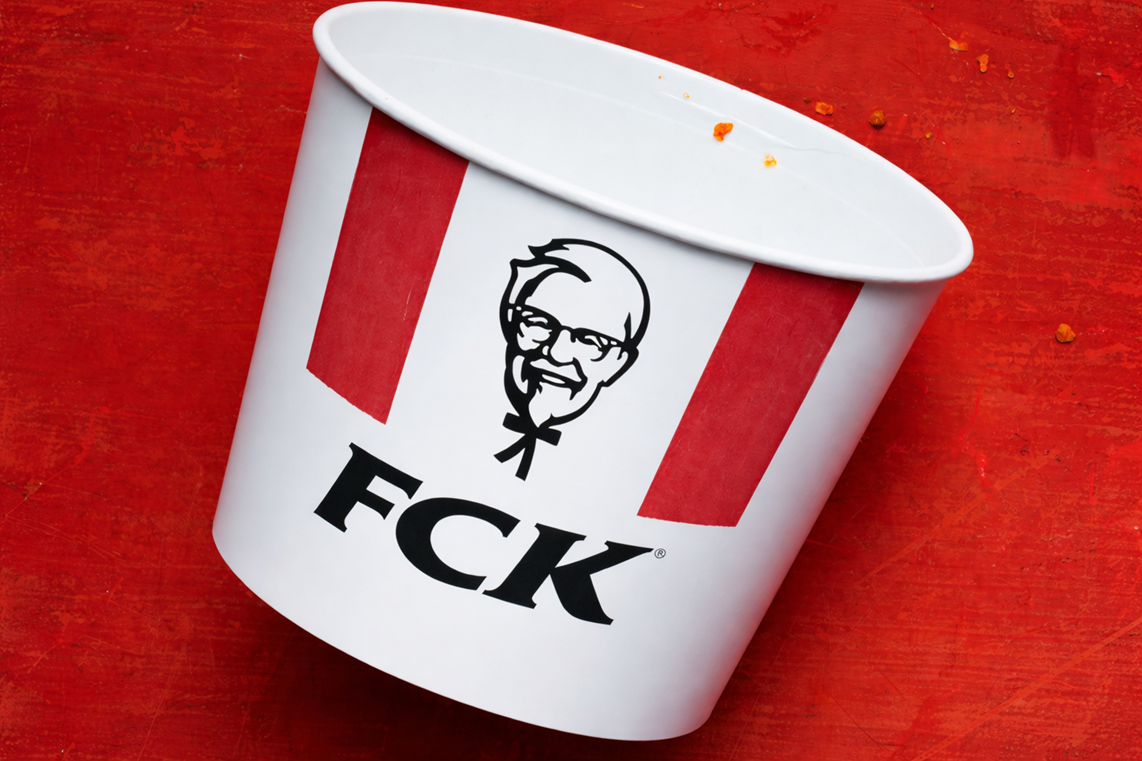
In 2018, KFC faced a huge problem in the UK and Ireland. A new delivery partner meant the company ran out of chicken and had to close hundreds of restaurants for days. People were angry, posting photos of shut stores and venting online, and the story was all over the news.
Instead of hiding, KFC took out a full-page newspaper ad that showed an empty bucket with the letters on the logo rearranged to say "FCK", which you already know what it meant. The small copy under it was a simple, straight apology that admitted the mistake, thanked staff and customers, and promised to fix the mess.
The ad spread quickly on social media, even though it was a print piece first. Many people who had been annoyed shared it as a clever, honest response, and the brand started to win back goodwill while still dealing with the supply issue.
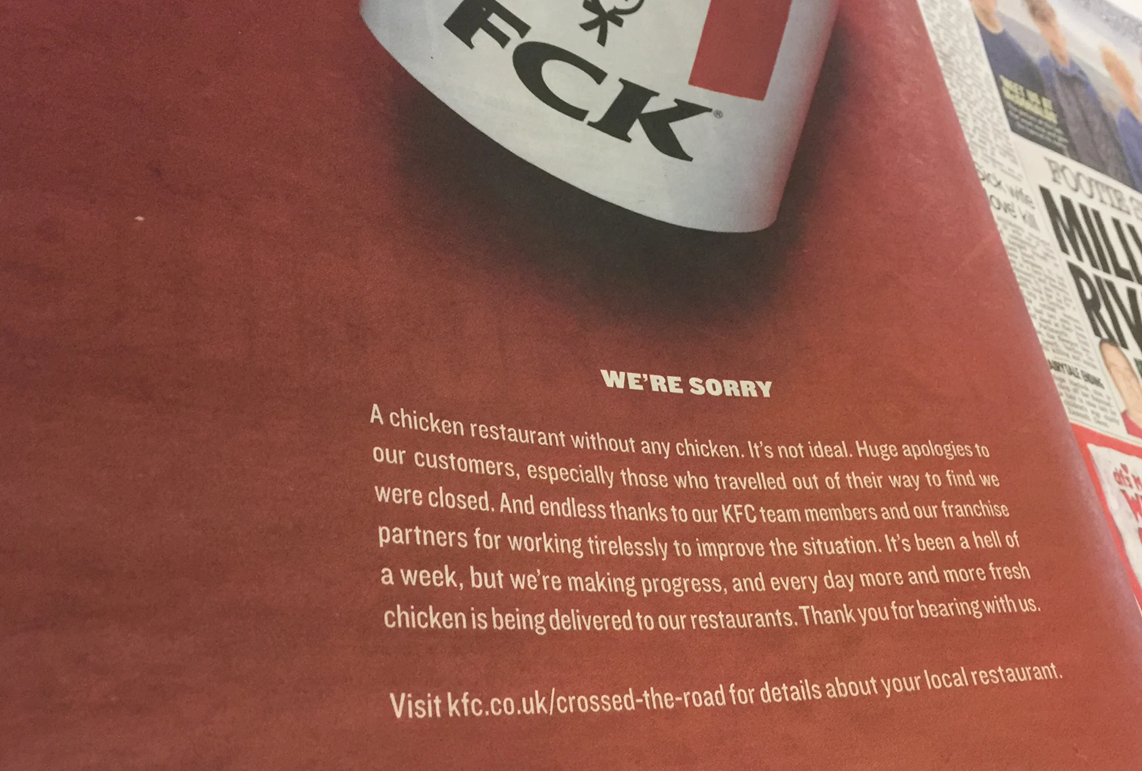 KFC's brilliantly self‑aware "FCK" newspaper apology ad. Image credits: uk.news.yahoo.com
Why It Stood Out and The Takeaway
The near swear word caught the eye, but the tone stayed warm and human, which made people feel that KFC understood their frustration. It also showed a strong sense of timing: the brand replied while emotions were still high, then let people carry the ad online, turning a crisis into a moment of shared laughter.
The ad was remembered because it was so simple. One smart visual twist on the logo, a short headline, and a clear apology were enough to shift the story from "KFC in chaos" to "KFC can laugh at itself and say sorry".
What this campaign teaches us:
- When you mess up, say sorry clearly and quickly instead of hiding or blaming others.
- Use a human voice that sounds like a real person or resonates with your audience.
- Think of simple ideas that are easy for people to understand and share in seconds.
- Treat crises as chances to show your brand values, such as honesty, humour, and respect for customers.
5. Pepsi's 'Pepsi Challenge'
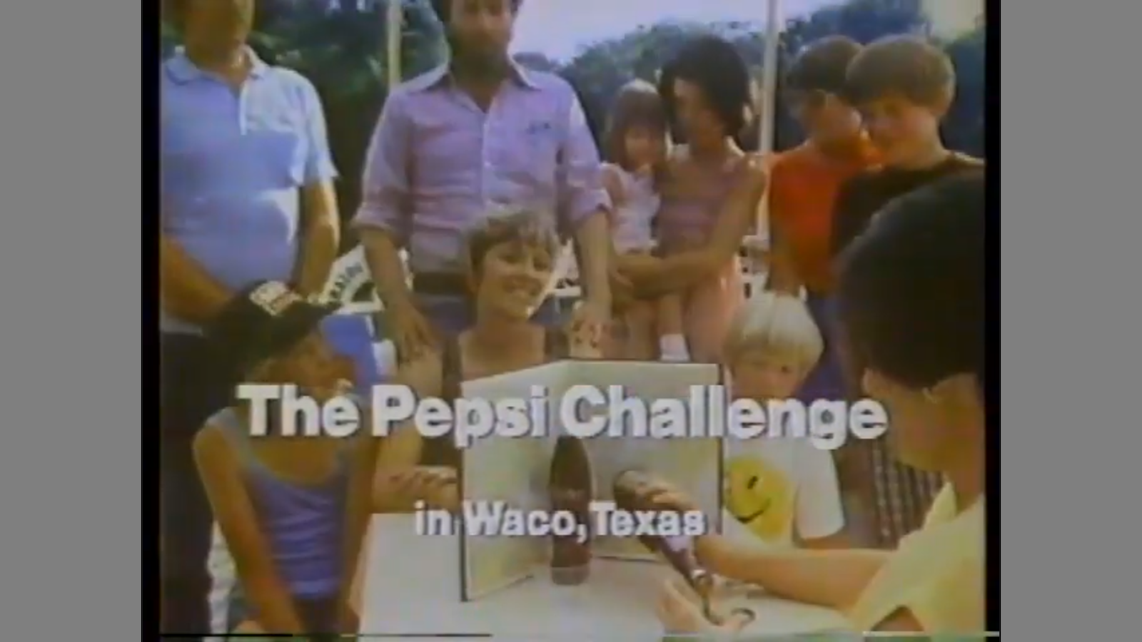 Pepsi's classic 1978 Pepsi Challenge commercial in Waco, Texas. Watch the full commercial here.
In the mid-1970s, Pepsi started running blind taste tests in malls, fairs, and busy public spaces across the US. People were given two unlabelled cups of cola and asked which they liked more, only finding out afterwards which was Pepsi and which was Coca-Cola.
Pepsi filmed these tests and turned them into TV ads. The clips showed people picking Pepsi, often looking surprised when the brand was revealed.
The campaign did not just stay on TV. It became a touring roadshow, with events, pop-up booths, and local media coverage, giving people a chance to "take the Pepsi Challenge" themselves and talk about it with friends and family.
Why It Stood Out and The Takeaway
The Pepsi Challenge allowed customers to feel like they were proving a point themselves, not just being talked at by a brand. The blind test format made the results seem fair and honest, which helped Pepsi position itself as the bold challenger taking on a bigger rival.
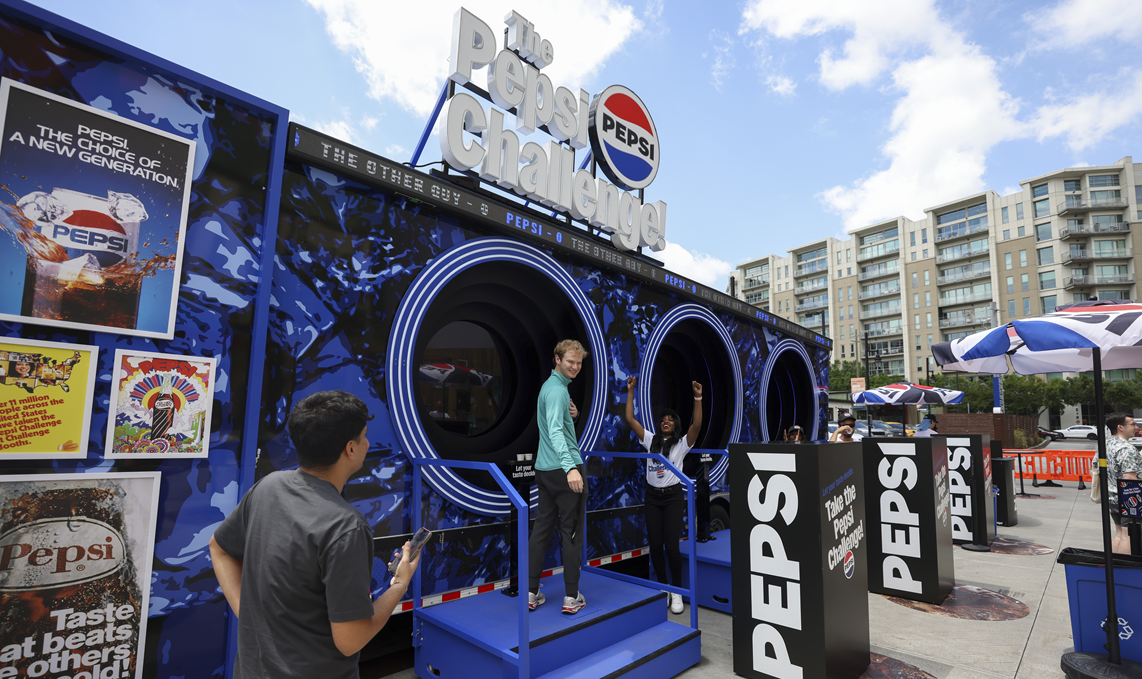 Pepsi's 2025 Pepsi Challenge experiential pop‑up, inviting people to taste and compare in a live street activation. Image credits: ajc.com
Additionally, in 2025, Pepsi revived and transformed the once‑simple blind taste test into an immersive, photo‑ready pop‑up experience. Instead of just handing out unmarked cups in a mall, the updated version uses branded installations and social‑share moments to invite a new generation to take the challenge in public spaces.
It turned a simple product benefit, taste, into an experience. People did not just hear that Pepsi tasted better; they tasted it, saw others do the same, and then watched it again on TV, which kept the story alive in culture for years.
What this campaign teaches us:
- Let people try your product in a clear, fair way instead of only telling them it is better.
- Turn product tests or demos into content you can share across video, events, and social.
- Use a bigger rival as a contrast, but keep the focus on real people and their reactions.
6. Dove's 'Real Beauty' Campaign
 An AI-enhanced screenshot from Dove's first ad for "Real Beauty" campaign. Watch the full commercial here.
In 2004, Dove kicked off its 'Real Beauty' campaign after research showed that only a tiny share of women saw themselves as beautiful. Instead of using fashion models, the brand showed women of different ages, sizes, and skin tones in simple, honest photos and videos that looked closer to real life than most beauty ads.
Over time, the idea grew into many forms: print ads on billboards, TV spots, a global self-esteem project for young people, and later the famous 'Real Beauty Sketches' film.
In that video, an FBI-trained sketch artist drew women as they described themselves, then again based on how strangers described them, revealing how harshly many women judge their own looks.
The campaign kept going for years, turning from a single ad push into a long-running brand promise about self-esteem, body image, and more honest beauty stories.
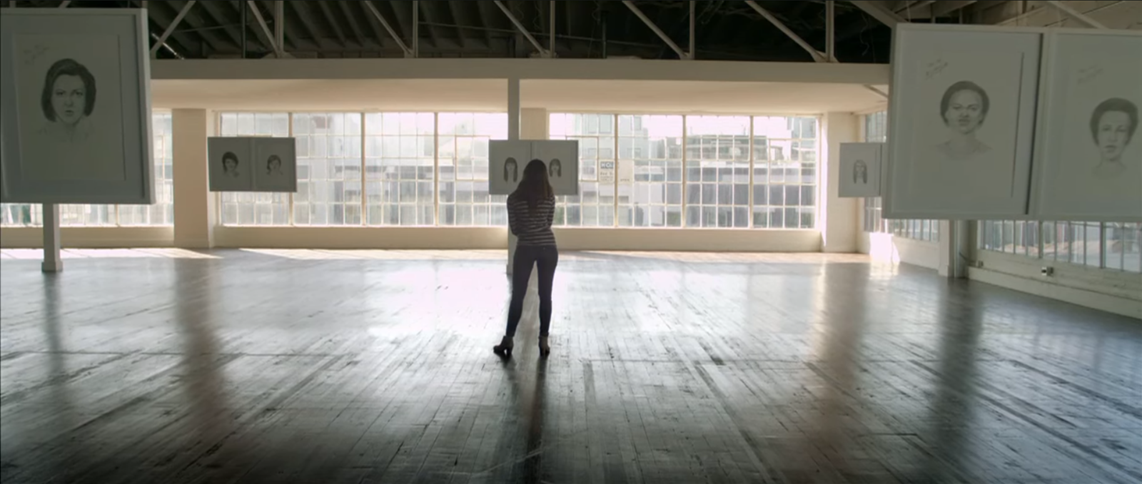 A screenshot from Dove's "Real Beauty Sketches" video. Watch the full video here.
Why It Stood Out and The Takeaway
This campaign tapped into a deep, real problem: many women feel they are not good enough when they look in the mirror. By putting regular people front and centre and sharing strong stats about confidence and self-image, Dove built an emotional story that felt bigger than just selling soap or body wash.
Dove stayed with the idea for years instead of treating it as a short stunt. New chapters like 'Real Beauty Sketches', the Self-Esteem Project, and more recent work on AI and filters all connect back to the same core message about real, diverse beauty.
What this campaign teaches us:
- Start with a real human tension or pain point in your audience.
- Make sure your creative choices (who you show and how you show them) match your values.
- Think long term: build a platform you can add to over the years, not just a one-off ad.
- Use data and research to support your message and give people "wow" stats they will remember and share.
7. Spotify Wrapped
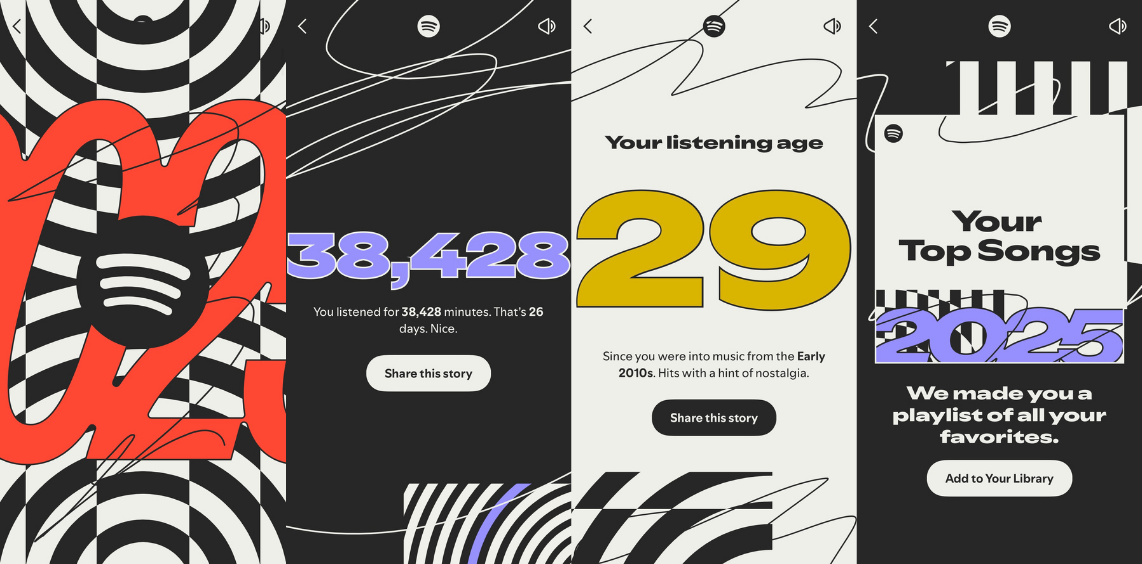 Spotify Wrapped 2025 turns a year of listening into a bold, shareable story.
Started in 2016, Spotify sends users a set of colourful cards that recap their listening from the past 12 months, usually at the end of November or early December. These cards show top artists, songs, genres, and total minutes listened, often with fun labels like "your audio aura" or "your listening personality".
Users tap through slides in the app, with bold colours, bold typography, and short lines that make the stats feel playful and easy to understand. At the end, Spotify gives ready-made images sized for Instagram, X, and other platforms so people can share with one tap.
Over the years, Wrapped has grown into a bigger campaign with outdoor ads, social posts, and billboards that highlight quirky listening habits across cities and countries. Local references, jokes, and data points help it feel tailored to each region, even though the idea is global.
Why It Stood Out and The Takeaway
Spotify Wrapped stands out because it uses first-party data to give people a fun mirror of their own habits. Instead of talking about features, it shows users something about themselves, which feels personal, surprising, and sometimes a bit funny.
It also became a yearly moment that people expect. Every year, timelines fill up with Wrapped cards on the same day, which creates a sense of FOMO and pushes others to check their own results. Brands and artists join in too, posting their stats and thanking fans, which keeps Wrapped at the centre of music talk for days.
What this campaign teaches us:
- Look for ways to turn user data into simple stories that feel personal and fun.
- Build a repeatable yearly or seasonal moment so your campaign can become a habit people look forward to.
- Design assets for easy sharing from day one, with formats that work natively on social platforms.
- Use local insights and humour so a global idea still feels fresh in different regions.
- Give creators and partners their own view of the data so they join the conversation and amplify your message.
8. Coca-Cola's 'Share a Coke'
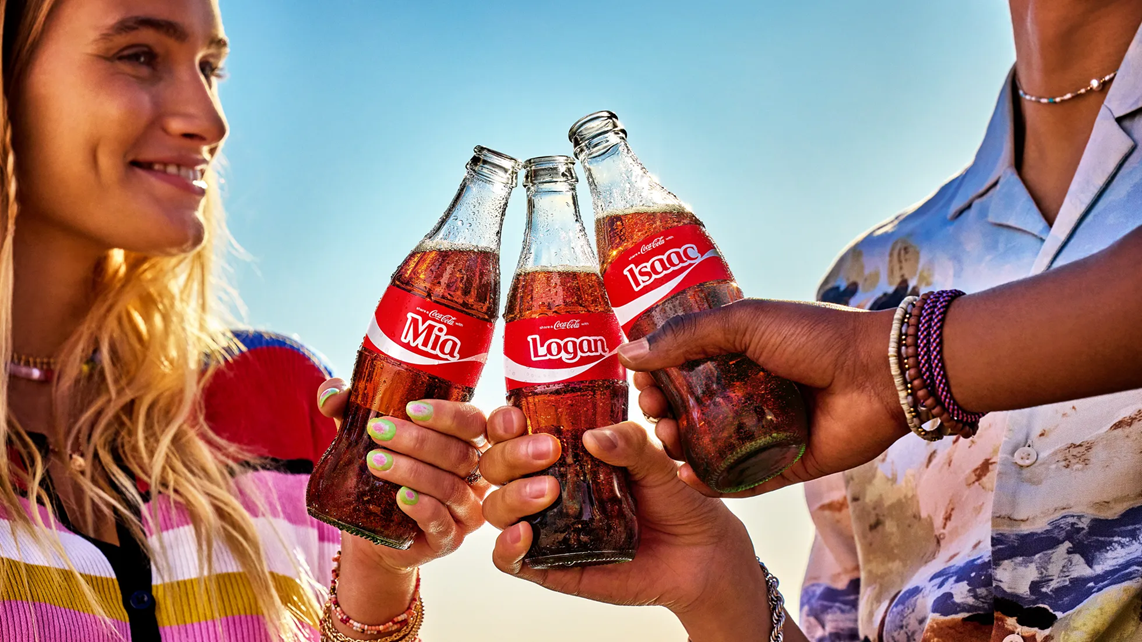 Coca‑Cola's revived 2025 "Share a Coke" campaign to spark real‑world moments of connection for a new Gen Z audience. Image credits: coca-colacompany.com
Coca-Cola first launched 'Share a Coke' in Australia in 2011, replacing its logo on bottles and cans with popular first names like 'Jess', 'Tom', or 'Chris'. The idea was simple: people could find their own name or a family member's name on a Coke and literally "share a Coke" with them.
The brand rolled the idea out to more countries and added different sets of names, nicknames, and phrases like 'Mate' or 'Bestie', depending on the local culture. Many markets also set up custom-printing kiosks or online tools so people could create bottles with more unusual names that did not appear on shelves.
As people found "their" bottle, they started posting photos on Facebook, Instagram, and Twitter, tagging friends and using campaign hashtags. Shops and events also used the idea for displays and contests, turning a normal drink purchase into a small moment of fun and connection.
Why It Stood Out and The Takeaway
The campaign felt personal. Seeing a name on a label made the product feel like it belonged to you or someone you cared about, which encouraged people to buy multiple bottles, gift them, and talk about them. It turned packaging into a tiny, affordable gift that carried a feeling.
People did the core action in the real world, picking up a bottle in a shop, then took that moment to social media by sharing photos and tags. That mix of physical product and user-generated content helped sales and kept Coke in people's feeds without the brand needing to talk about itself all the time.
What this campaign teaches us:
- Look at your product packaging or main touchpoint and ask how it could feel more personal and "ownable".
- Use local culture and language (names, nicknames, phrases) to make a global idea feel relevant in each market.
- Support the main idea with tools or events that let fans go a bit deeper if they want.
- Think about how one action in the real world can naturally lead to sharing online, without forcing people to post.
9. Apple's 'Think Different' Campaign
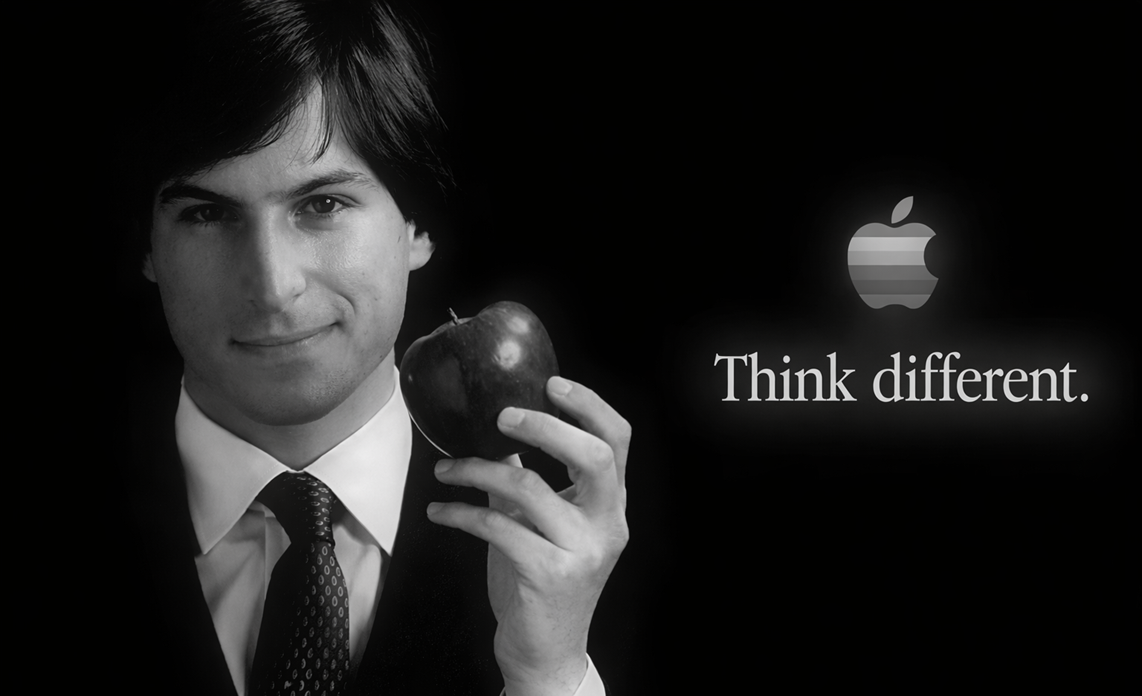 An AI-enhanced screenshot from Apple's first ad for "Think Different" campaign. Watch the full commercial here.
In 1997, Apple was in trouble, with falling sales and a confused product line. The company brought back Steve Jobs and soon launched the 'Think Different' campaign as a big statement about what Apple stood for.
The core TV spot, often called 'Crazy Ones', showed black-and-white footage of figures like Albert Einstein, Martin Luther King Jr, and Amelia Earhart, while a voiceover praised those who see the world differently. The line "Think Different" was the final message, placed next to a simple Apple logo.
Print ads followed the same style, with large portraits of famous thinkers, artists, and innovators, plus the tagline and logo. Apple paired this brand platform with new products like the iMac and later the iPod and iPhone, linking the idea of "thinking different" to using Apple as a creative tool.
Why It Stood Out and The Takeaway
This campaign sold a point of view. Instead of shouting about processors or memory, Apple talked about creativity, courage, and breaking norms, which made the brand feel like it belonged to people who wanted to do meaningful work. It turned buying a computer into a way of saying something about yourself.
The creative work was so simple and respectful. The black-and-white images, quiet music, and minimal copy gave the message space to breathe, and the tagline was short enough to stick in culture for years. That mix of strong emotion and clean design helped Apple rebuild its image and set the tone for later launches.
What this campaign teaches us:
- Know what your brand believes in beyond products and make that belief clear in your messaging.
- Use simple, strong creative that lets one big idea shine instead of trying to say everything at once.
- Let your brand platform guide future launches so each new product adds to the same story over time.
10. Nike's 'Just Do It' Campaign
 An AI-enhanced screenshot from Nike's original 1988 "Just Do It" commercial. Watch the full commercial here.
Nike launched 'Just Do It' in 1988, at a time when it faced strong competition from other sports brands. The campaign started with TV ads that showed everyday people running, training, or playing sports, alongside elite athletes, all tied together by the simple three-word tagline.
One early spot featured 80-year-old runner Walt Stack, who talked casually about his daily miles while jogging across the Golden Gate Bridge. Other ads highlighted women, disabled athletes, and people overcoming social barriers, helping Nike connect with a diverse audience.
Over the years, Nike kept using 'Just Do It' across posters, TV, outdoor ads, and digital campaigns, pairing it with big cultural sports moments and bold faces like Michael Jordan, Serena Williams, and later Colin Kaepernick. The line stayed the same while the stories changed, which made it feel timeless and flexible.
 An AI-enhanced screenshot from Nike's "Just Do It" ad featuring Serena Williams. Watch the full commercial here.
Why It Stood Out and The Takeaway
'Just Do It' felt like a push to start, whether that meant going for a first run, training harder, or taking a stand in life. It spoke to fear, doubt, and procrastination in a very direct, human way, so many people heard it as advice to themselves, not just an ad line.
Nike used real, emotional stories to bring the words to life. The brand did not only show easy wins; it showed sweat, struggle, age, and risk, which made the victories feel earned. 'Just Do It' became tied to courage and self-belief, so wearing Nike felt like a small badge of that mindset.
What this campaign teaches us:
- Tell stories that show real struggle and effort, so your message feels honest.
- Show a wide range of people who use your product, so more viewers can see themselves in your ads.
- Keep a strong tagline for years and let different campaigns add new layers of meaning to it.
- Connect your brand message to values like courage or persistence, so it becomes part of how people see themselves, not just what they buy.
Turning Ad Moments Into Brand Memories
Strong campaigns do not just fill ad space. They give your brand a clear voice, a simple story, and a place in people's lives that lasts longer than a single promo. When a campaign hits that level, it keeps working for you long after the budget is spent.
So for your next campaigns, start small and specific. Pick one clear feeling, one core message, and one main action you want people to take. Then stress-test every idea and cut anything that does not support it.
If you want help turning these lessons into a real plan for your brand, book a free consultation with our team. We can look at your current campaigns, spot the gaps, and map out simple, practical steps to build work people actually remember.
Got a question in mind? Check out the FAQs below for quick answers!
