
You have a visually stunning website and exceptional copy to match. But, as far as traffic goes, there aren't any customers to be found.
If you're in this position or building a website and believe you'll end up in this position, you aren't alone. In fact, multiple business owners struggle with the very same problem but think they can turn to quick-fix methods to drive traffic to their site and grow their business.
So, how are you supposed to know when to cut other methods and invest in long-term search engine optimisation services?
Let's uncover the 10 clear signs that your website needs SEO help and learn how to transform it from invisible to irresistible in search results.
Key Takeaways
- Your website might be failing because it lacks proper SEO, making it invisible to potential customers searching for your services.
- If you can't find your website in search results or rely heavily on paid ads, you're missing organic traffic opportunities.
- Without proper optimisation, you're missing from local searches and losing valuable leads that could have found your business.
- Slow loading times and poor Core Web Vitals scores frustrate visitors and hurt your search rankings significantly.
- Without a mobile-friendly website, you're potentially losing more than half of your possible customers to competitors.
- Neglecting content marketing and using outdated SEO practices prevents your website from building authority and attracting qualified leads.
Why Your Website Might Be Failing You
 Source: @gettyimages via canva.com
Your website could be failing because it lacks proper search engine optimisation, making it invisible to potential customers who are actively searching for your products or services online.
Many website owners focus solely on design and content, overlooking the crucial aspects of SEO that could help them rank better in search results and attract qualified leads to their business.
Search engine optimisation has become essential for business growth, particularly when you rely on digital channels to generate leads. Without it, your beautiful website might as well be a billboard in the desert.
SEO success requires a balanced approach across multiple areas: creating valuable content, implementing technical optimisations, and building authority through off-page efforts like quality backlinks and local citations.
A website without SEO is like a shop with its lights turned off. People simply can't find it, even if you offer exactly what they need.
Ready to turn the lights on? Let's explore the 10 clear signs that show your website needs SEO help right now.
1. You Can't Find Your Website in Search Results, Not Even Your Brand Name
Getting your brand name to appear in search results should be the easiest win for your website. Yet, many businesses struggle with this fundamental visibility issue.
When your website doesn't appear in search results for your brand name, it means search engines aren't properly recognising your business identity. This often happens due to poor website structure or insufficient brand signals across the web.
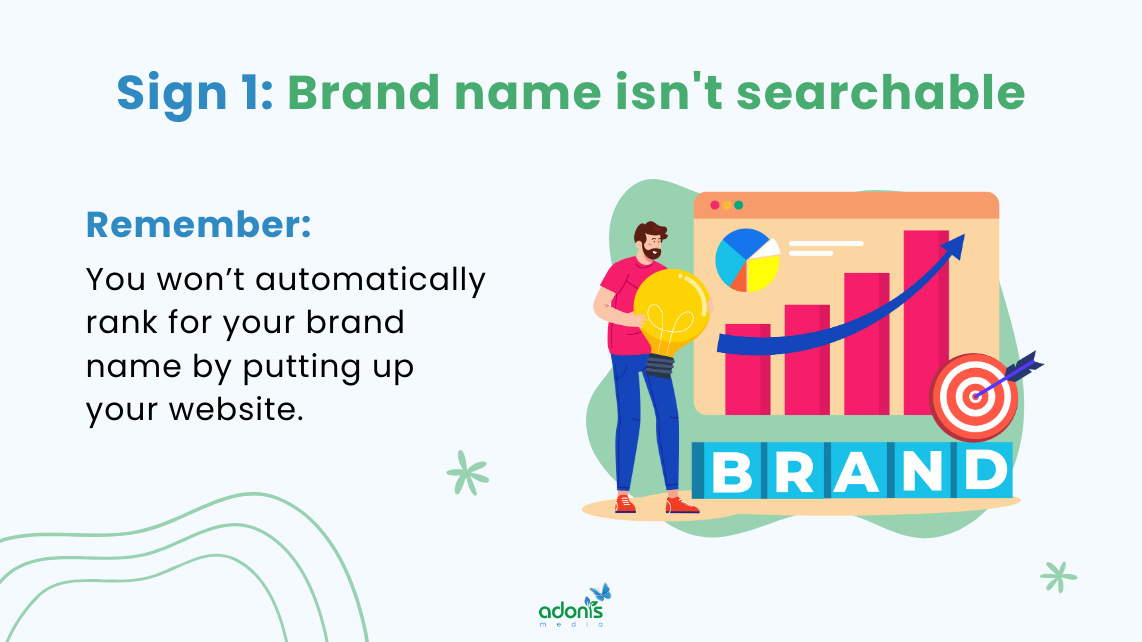
If your brand name is close to other relevant search terms or another company's name, you might end up not ranking at all or ranking for a different term altogether!
A comprehensive on-page SEO strategy can solve this by optimising your website's meta titles, descriptions, and content with proper brand mentions. Off-page SEO efforts like building quality backlinks and maintaining consistent business listings also strengthen your brand presence online.
Your brand name is your digital identity. If people can't find you when searching for it specifically, you're missing out on your most valuable potential customers.
2. You're Spending Too Much on Advertisements
While paid advertising can bring quick visibility, relying solely on it can drain your marketing budget rapidly without building a lasting organic presence. Many businesses fall into this costly cycle of dependency on paid traffic.
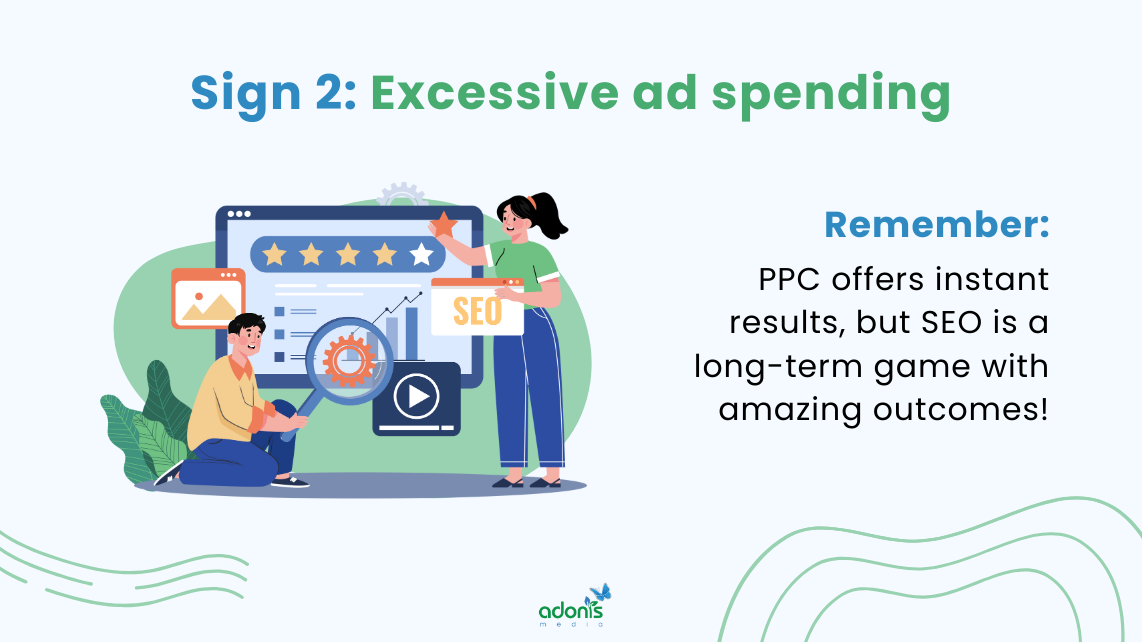
SEO requires patience and consistent effort, typically taking 4-6 months to show significant results. Meanwhile, PPC delivers immediate visibility but stops working when you pause your spending.
Search engine marketing works best when you blend both approaches. Use PPC to capture immediate opportunities while building your organic presence through SEO. This balanced strategy helps maintain steady traffic flow while gradually reducing ad dependency.
Smart businesses don't choose between SEO and PPC, because they use both strategically to maximise their online visibility while optimising their marketing spend over time.
3. You're Missing from Google Maps and Local Searches
A potential customer is just around the corner, searching for your type of business on their mobile phone. But they can't find you because you're invisible on local searches.
Local search optimisation has become crucial for businesses, especially small and medium-sized ones.
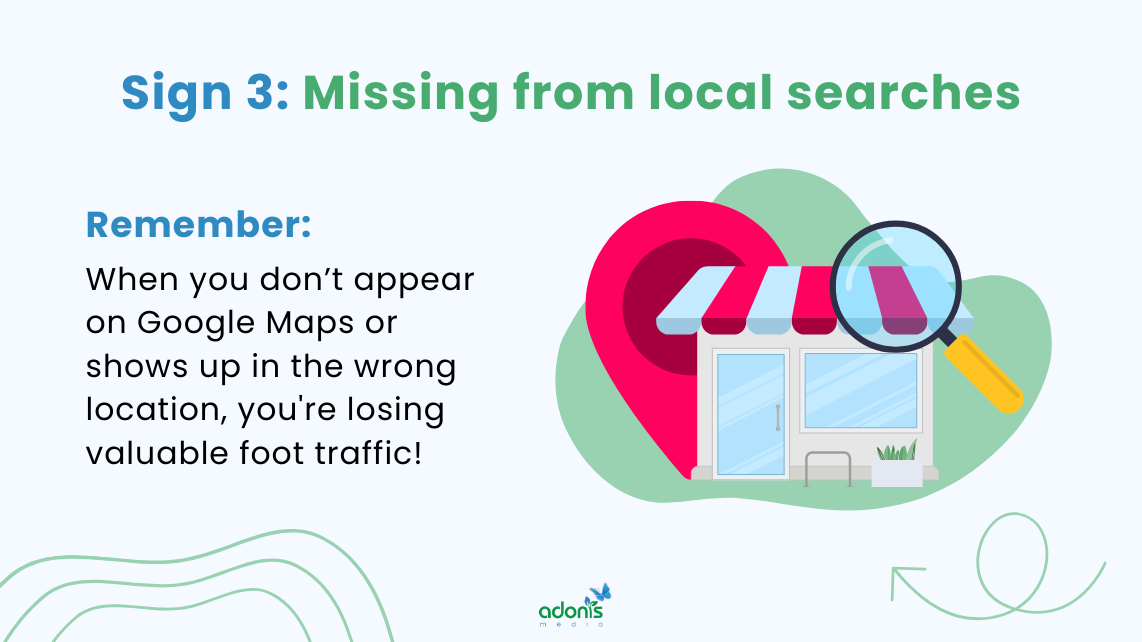
Google search isn't limited to national or global results anymore. Local search has transformed how people find businesses near them, with most consumers checking online before visiting a physical store.
One of the most vital search functions for local optimisation is whether or not your business appears on Google Maps. If you show up in the wrong location, you might cause customers a real headache. And, if you don't show up at all, you're jeopardising your ability to convert customers at all.
Local SEO strategies can boost your visibility by optimising your Google Business Profile, ensuring accurate business information across directories, and building local citations that help Google understand where your business operates.
4. You're Generating Little to No Quality Leads
You've invested time and money in creating a professional website to establish your digital presence, but instead of generating leads, your website sits quietly in the digital void.
A website without proper optimisation is like having a shop in a ghost town. Even with excellent products or services, you can't generate leads if potential customers can't find you through search engines.
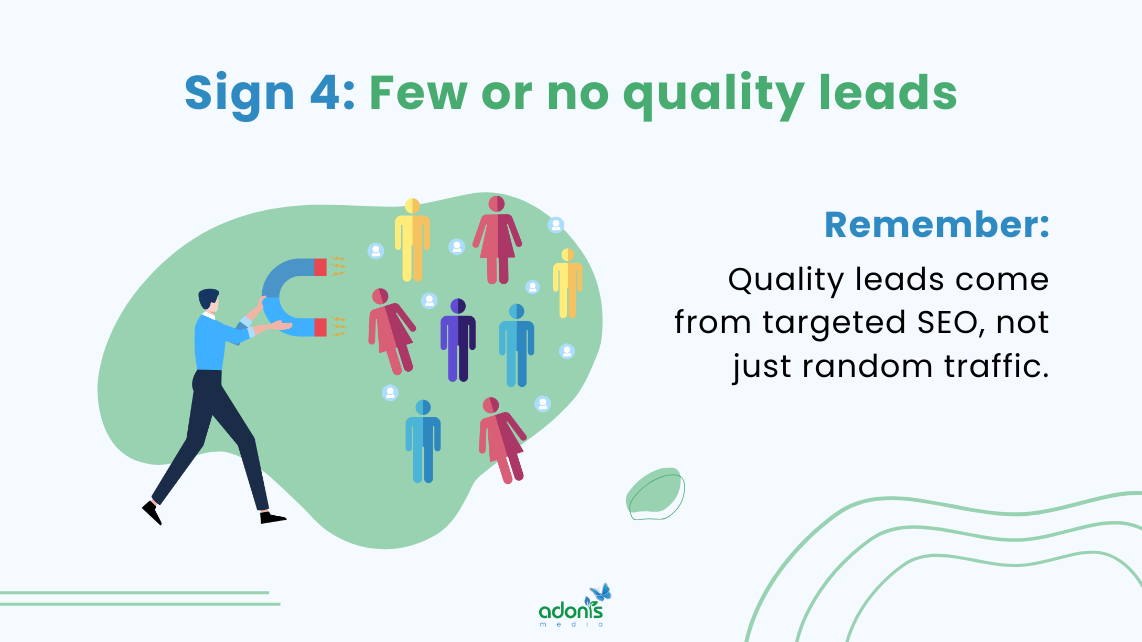
The challenge isn't just about getting traffic, but attracting qualified leads who are actively searching for your products or services and ready to engage with your business.
Through strategic SEO implementation, you can optimise your website to target specific keywords and search intent, helping you attract visitors who are more likely to convert into valuable leads.
Without a steady flow of quality leads from organic search, your website isn't fulfilling its primary purpose as a lead-generation tool for your business.
5. You're Watching Your Rankings Suddenly Slip
Even successful websites can experience unexpected drops in search rankings, causing significant traffic loss. This often happens when search engines update their algorithms or detect issues with your website's optimisation.
Rankings can slip due to various factors, such as outdated content, poor technical maintenance, competitors improving their SEO, or previous use of questionable optimisation tactics that no longer work with current search standards.
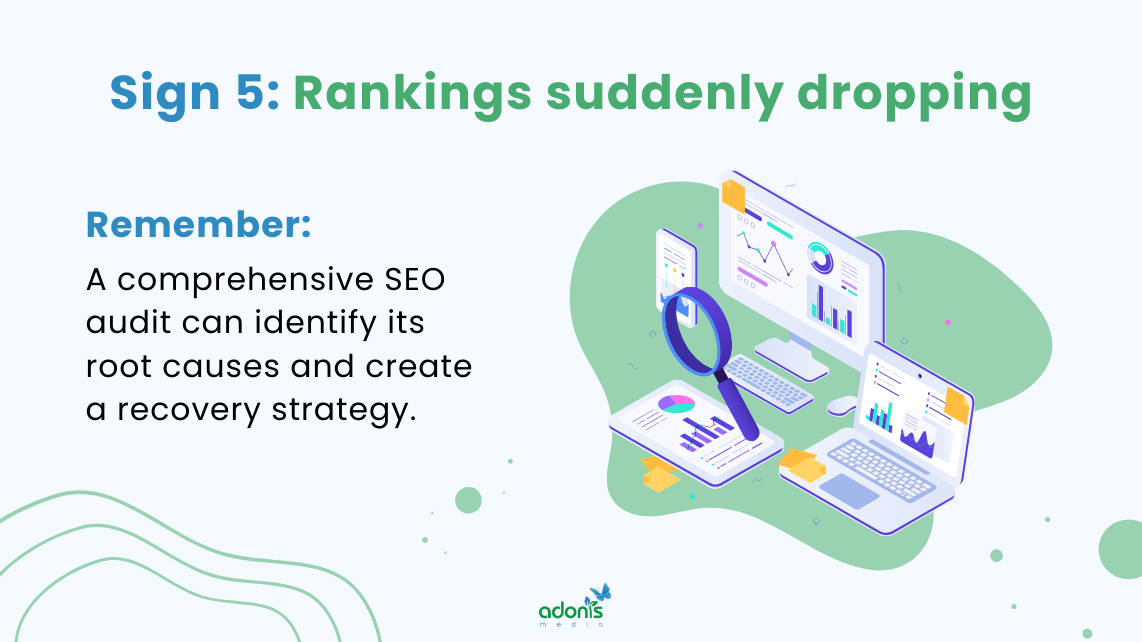
A comprehensive SEO audit includes reviewing your content quality, checking technical issues, analysing backlink profiles, and ensuring compliance with current SEO best practices.
Professional SEO tools like Semrush, Ahrefs, or Google Search Console help track your rankings, monitor keyword positions, analyse competitors, and identify technical issues affecting your search performance.
Sudden ranking drops aren't the end but are opportunities to improve your website's overall search engine optimisation strategy.
6. You're Failing Core Web Vitals Tests
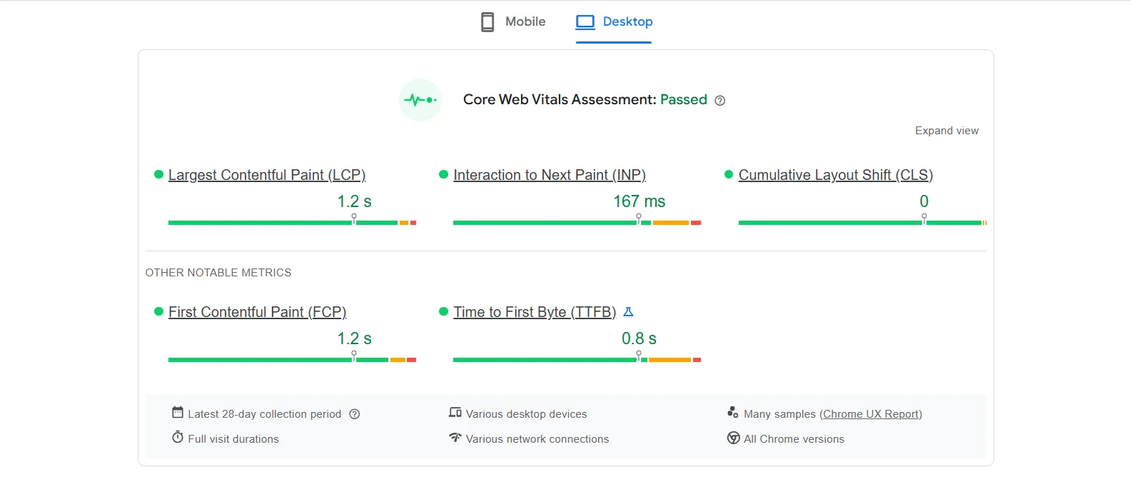
Core Web Vitals are Google's metrics for measuring user experience on your website. They focus on loading performance, interactivity, and visual stability through three main measurements: Largest Contentful Paint (LCP), First Input Delay (FID), and Cumulative Layout Shift (CLS).
Failed Core Web Vitals indicate that users might struggle with slow-loading pages, delayed interactions, or shifting elements on your website, leading to frustration and higher bounce rates.
Here's an example of a result of the Core Web Vitals Assessment for desktop:
And this one is for mobile:
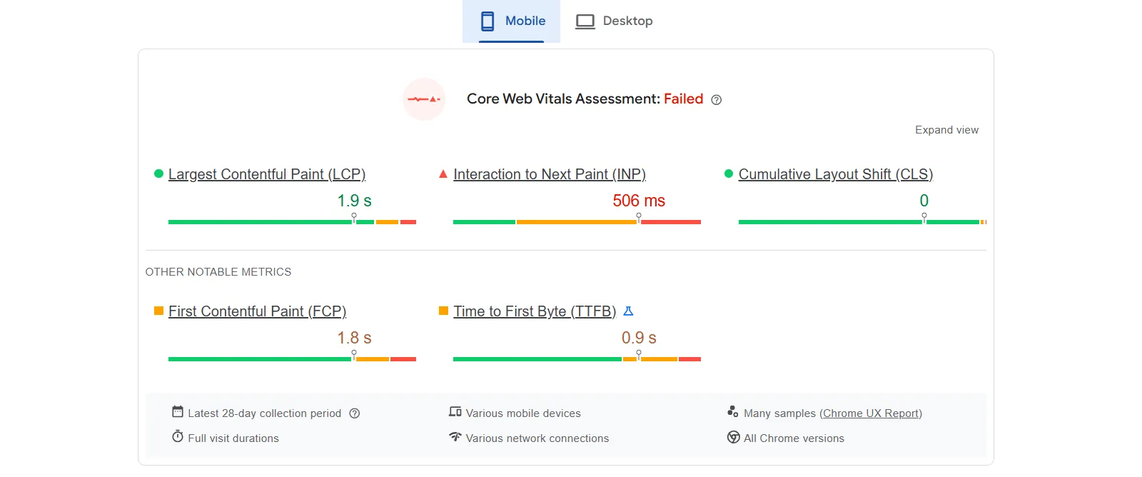
Technical SEO improvements can enhance your Core Web Vitals by optimising image sizes, improving server response times, minimising unnecessary code, and ensuring proper content loading priorities.
You can check your website's Core Web Vitals performance using Google's PageSpeed Insights tool at pagespeed.web.dev. This tool provides detailed reports and specific recommendations for improvements.
7. You're Making Visitors Wait Too Long for Pages to Load
Slow-loading websites frustrate visitors and waste their time. Research shows that the likelihood of a visitor bouncing increases by 32% when page load time increases from one to three seconds.
Website speed affects everything from user experience to conversion rates. Each additional second of loading time increases the likelihood that visitors will abandon your site and move to a competitor's website.
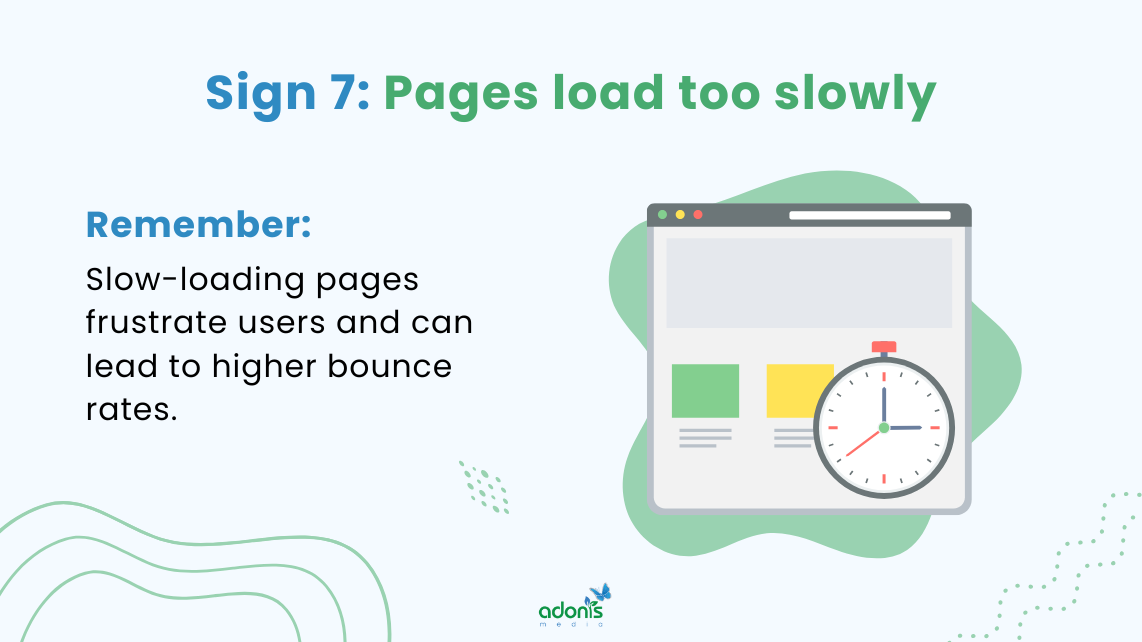
Technical SEO specialists can improve loading times by optimising images, leveraging browser caching, minifying code, reducing server response time, and implementing content delivery networks (CDNs).
Every second counts in the digital world. Faster loading times mean better user experience, higher engagement, and improved search rankings.
8. You Don't Have a Mobile-Friendly Website
You're probably wondering why this is included. This should be a website-specific problem, right? But no! SEO is still connected here.
With over 62.54% of web traffic coming from mobile devices, having a mobile-friendly website isn't just an option. It's crucial for reaching and engaging with your target audience effectively.
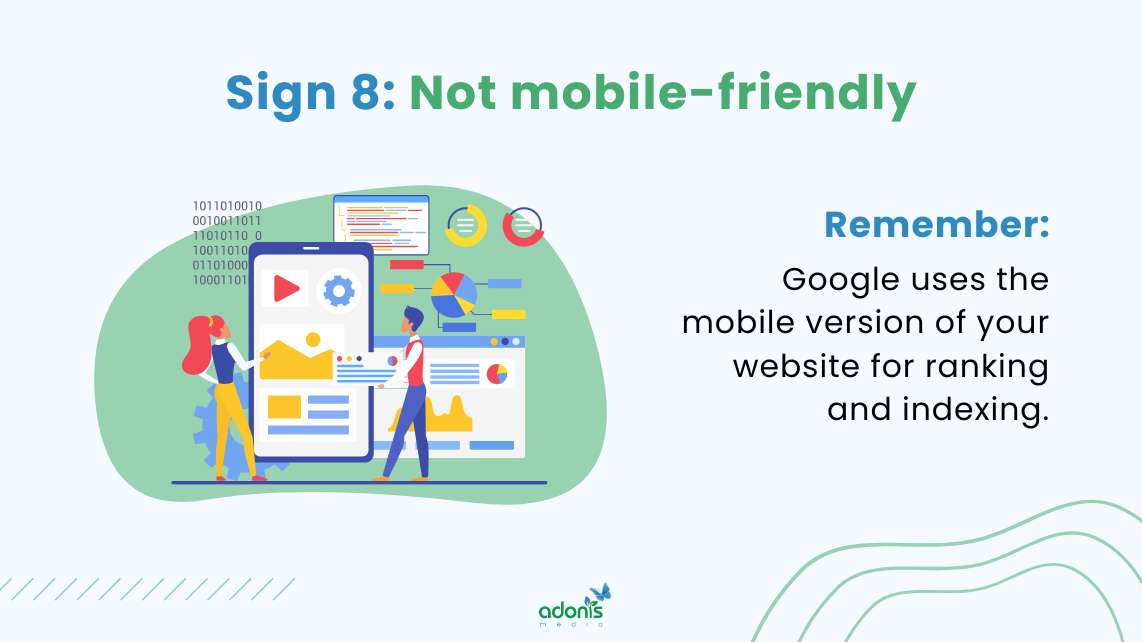
Google predominantly uses mobile-first indexing, which means it primarily uses the mobile version of your website for ranking and indexing. If your site isn't mobile-friendly, your rankings will suffer.
Mobile SEO focuses on creating seamless experiences across all devices, ensuring proper text sizing, touch-friendly buttons, responsive images, and easy-to-navigate menus for mobile users.
Through responsive design implementation, mobile-specific speed optimisations, and content restructuring, technical SEO helps create a mobile-friendly website that ranks well in search results.
Your mobile website can prioritise different elements than your desktop version, focusing on what mobile users need most while maintaining your brand's core message and functionality.
9. You're Neglecting Content Marketing Opportunities
Content marketing involves creating and sharing valuable, relevant content to attract and retain your target audience, ultimately driving profitable customer actions through blogs, videos, podcasts, and other engaging formats.
Many businesses focus solely on promotional content, missing opportunities to build trust and authority in their industry. Without strategic content, you're letting valuable organic traffic slip through your fingers.
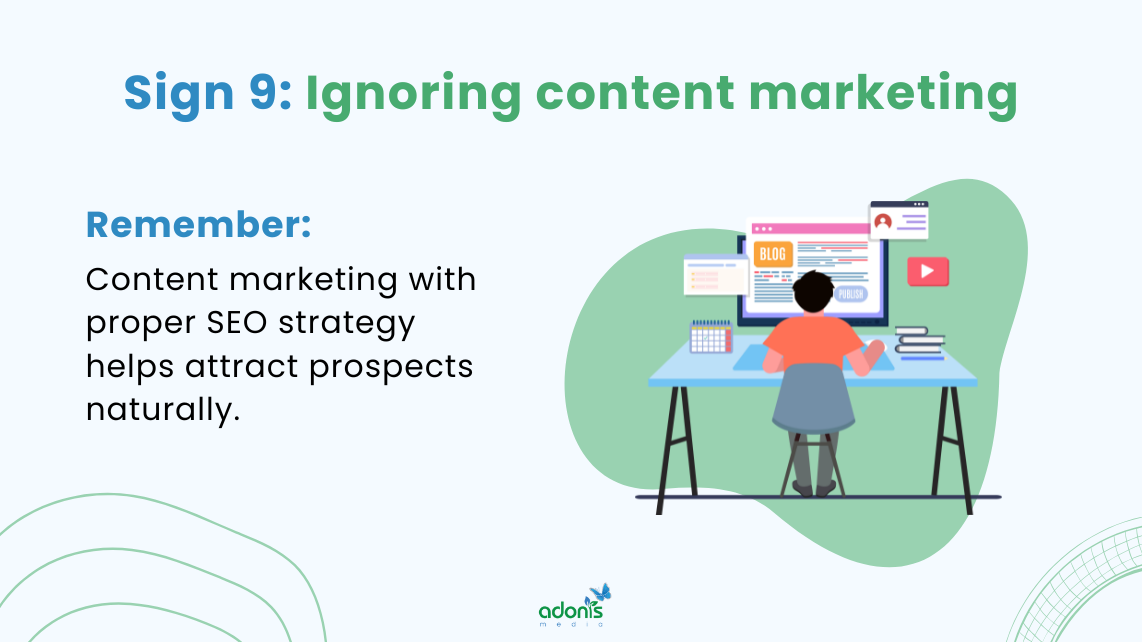
Inbound marketing and demand generation thrive on quality content that addresses customer pain points throughout their journey. Content marketing helps attract prospects naturally, nurturing them from awareness to decision-making stages.
SEO content strategy helps identify topics your audience searches for, optimise content for search visibility, and create comprehensive pieces that answer user queries while building your website's authority.
10. You're Stuck with Outdated SEO Practices
Remember when stuffing keywords into white text and buying thousands of cheap backlinks worked? Those days are long gone, and these outdated tactics can now harm your website's rankings.
Old SEO practices like keyword stuffing, duplicate content, and artificial link building no longer work. Search engines have become smarter at detecting and penalising these manipulative techniques.
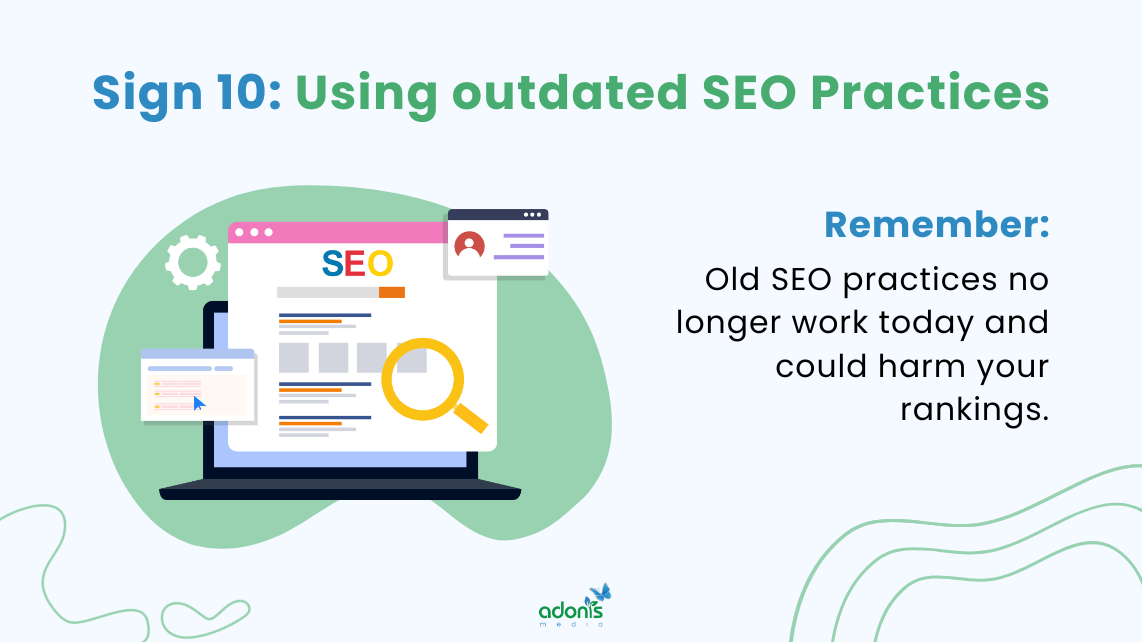
SEO constantly evolves with search engine algorithm updates. What worked five years ago might hurt your rankings today, making it crucial to stay current with best practices and industry changes.
Experience, Expertise, Authoritativeness, and Trustworthiness (E-E-A-T) have become central to SEO success. Search engines now prioritise content that demonstrates genuine expertise and helps users.
Working with SEO professionals who stay current with industry changes ensures your website follows updated practices while avoiding harmful, outdated techniques that could trigger penalties.
Don't let outdated SEO practices hold your website back. Embrace current strategies that focus on providing genuine value to your audience.
Taking Your Website from Invisible to Discoverable
These signs aren't just warnings but opportunities to transform your website into a powerful lead-generation tool. From invisible search rankings to technical issues like Core Web Vitals and mobile responsiveness, each challenge has a solution through proper SEO implementation.
By addressing these issues with current best practices, you can build a strong online presence that attracts qualified leads and grows your business organically.
Ready to make your website work harder for your business? Book a free consultation with our expert team today. We'll analyse your website's current performance and create a tailored strategy to boost your visibility in search results.
Got a question in mind? Check out the FAQs below for quick answers!
