

For decades, companies thrived or perished based on the effectiveness of their sales funnels. The concept was straightforward: attract a large number of prospects at the top, and gradually convert those who reach the bottom into customers.
However, the sales landscape has evolved dramatically, but traditional sales funnels have not kept pace.
The buyer's journey is no longer a straightforward path from awareness to purchase. Instead, it is filled with detours and complex decision-making processes. That's why today's sales leaders must rethink the funnel and explore alternatives.
In this article, we'll delve into the sales funnel, compare it with the flywheel model, and help you decide which approach is best for your business.
Key Takeaways
- The sales funnel is a linear model guiding prospects from awareness to purchase.
- It narrows as prospects progress, focusing on attracting, nurturing, and converting leads into customers.
- The flywheel model is cyclical, prioritising customer satisfaction and leveraging it for repeat business.
- Unlike funnels, flywheels emphasise continuous engagement and reducing friction to maintain momentum.
- Key flywheel stages: attract potential customers, engage them effectively, and delight them for long-term loyalty.
- Transitioning to a flywheel requires a mindset shift towards building lasting relationships over one-time transactions.
- Use tools like customer journey mapping and data metrics to optimise your sales strategy.
- Content marketing is essential in both models by building trust and addressing customer pain points.
What Is a Sales Funnel?
A sales funnel is a visual representation of the customer journey from initial awareness to the final purchase.
It is called a "funnel" because it starts wide at the top, capturing a large number of potential customers, and narrows down as prospects move through the various stages, ultimately leading to a smaller number of actual buyers at the bottom.
- Top of the Funnel (TOFU): A large number of potential buyers enter the funnel.
- Middle of the Funnel (MOFU): Prospects are filtered based on specific criteria, narrowing down to a smaller, more interested group.
- Bottom of the Funnel (BOFU): The most qualified prospects become opportunities, with a final decision leading to a closed-won or closed-lost deal.
Throughout this process, the probability of closing a sale increases as more information is exchanged, helping customers see the benefits of your product or service. However, if a deal moves to closed-lost, the probability drops to zero.
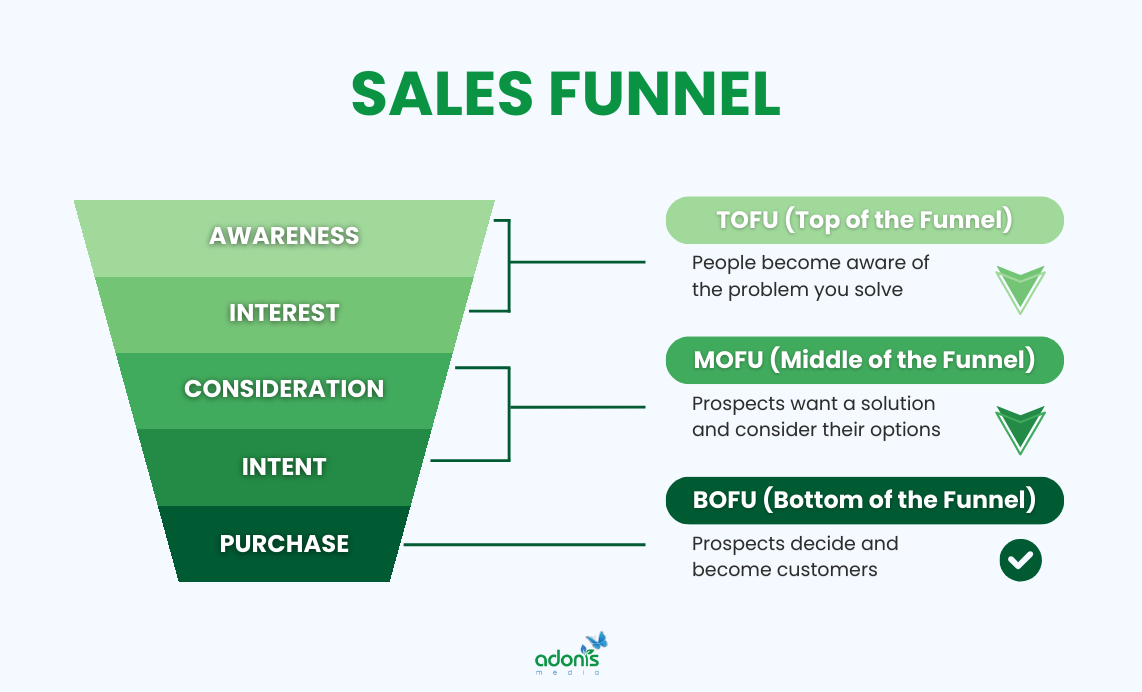
Stages of a Sales Funnel
- Awareness: At the top of the funnel, the goal is to attract as many potential customers as possible. This stage involves activities like advertising, social media marketing, and content marketing to create awareness about your product or service.
- Interest: In the middle of the funnel, the focus shifts to nurturing the prospects who have shown interest. This involves engaging them with valuable content, email campaigns, and personalised communication to build a relationship and maintain their interest.
- Consideration: Prospects in this stage are evaluating your product or service against competitors. Providing detailed information, case studies, and demos can help convince them of the value you offer.
- Intent: At this point, prospects are ready to make a decision. Offering special promotions, answering any last-minute questions, and providing testimonials can help push them towards a purchase.
- Purchase: The final stage of the funnel is where the prospect becomes a customer. This involves closing the sale, processing the transaction, and ensuring a smooth onboarding process.
How to Create a Sales Funnel
Creating an effective sales funnel involves several key steps that guide potential customers from initial awareness to the final purchase.
Here's a detailed breakdown of how to create a sales funnel that drives results:
- Define the Problem: Understanding your audience's pain points, expectations, and interests is crucial. Conduct market research, analyse customer feedback, and create buyer personas to gain deep insights into what your potential customers need.
- Set Clear Goals: Determine what you want to achieve at each stage of your sales funnel. Goals can include generating leads, increasing product demos, boosting e-newsletter sign-ups, or driving purchases. Clear objectives help measure the effectiveness of your funnel and guide your marketing strategies.
- Create a Preliminary Offer: Attracting prospects is the first step in filling your funnel. Offer valuable content or incentives, such as free tools, templates, webinars, or discounts, to capture their interest and gather their contact information.
- Qualify Leads: Not all leads are equal. Develop criteria to qualify leads based on their fit and interest in your product. Use lead scoring systems to prioritise leads by assigning points based on their actions and characteristics, ensuring you focus on those most likely to convert.
- Nurture Qualified Leads: Engage your leads through personalised email campaigns, social media interactions, and direct messages. Provide relevant content and solutions that address their needs, helping them move further down the funnel. Consistent communication builds trust and keeps your brand top of mind.
- Close the Deal: As leads move closer to a purchase decision, provide additional incentives, answer any remaining questions, and offer personalised support. This stage requires effective sales techniques to convert prospects into customers. Ensure a smooth transition and a positive buying experience.
- Track Results and Analyse Data: Regularly review your funnel's performance by analysing key metrics, such as conversion rates, drop-off points, and customer feedback. Use this data to identify areas for improvement and optimise your funnel for better results. Tools like HubSpot's pipeline management software can simplify tracking and analysis.
Sales Funnel vs Sales Flywheel
The traditional sales funnel and the modern sales flywheel represent two different approaches to the customer journey.

The sales funnel focuses on guiding prospects through a linear path from awareness to purchase, narrowing down as it progresses. This model emphasises the stages of attracting, nurturing, and converting leads, but often ends at the point of sale.
In contrast, the sales flywheel is a more dynamic and holistic approach, emphasising continuous engagement and customer satisfaction. It leverages the momentum of delighted customers to drive referrals and repeat business, creating a self-sustaining cycle of growth.
The flywheel recognises that the customer journey is not linear and that happy customers are powerful advocates who can propel business growth far beyond the initial purchase.
This shift from a funnel to a flywheel reflects the evolving nature of customer behaviour, where ongoing relationships and positive experiences are crucial for long-term success.
How to Create a Sales Flywheel
The flywheel model revolves around creating continuous momentum in your business by prioritising customer satisfaction and leveraging it to drive growth. Unlike the linear sales funnel, the flywheel is a cyclical model that keeps spinning as you add force and reduce friction.

Here's how it works:
- Attract: The first step is to draw in potential customers with valuable content, engaging marketing strategies, and a strong online presence. This could involve SEO, social media marketing, content marketing, and other inbound techniques that provide useful information and build trust with your audience.
- Engage: Once you've attracted potential customers, the next phase is engagement. This involves nurturing relationships through personalised communication, providing helpful resources, and offering solutions that meet their needs. Effective engagement requires understanding customer pain points and tailoring your interactions to address them, whether through email campaigns, chat support, or personalised offers.
- Delight: The final and most crucial phase is delighting your customers. By exceeding their expectations and providing exceptional service, you turn customers into loyal advocates. This can include excellent customer support, continuous engagement through updates and feedback requests, and rewarding loyalty with exclusive offers or programs. Delighted customers are more likely to promote your brand through word-of-mouth, reviews, and referrals.
As these satisfied customers share their positive experiences and bring in new prospects, they add energy to your flywheel, keeping it spinning.
The key to maintaining this momentum is to continually remove friction points that slow down the process. This could involve streamlining your onboarding process, enhancing user experiences, or addressing any obstacles that hinder customer satisfaction.
By focusing on these three core principles — attracting, engaging, and delighting — businesses can create a self-sustaining cycle of growth. The flywheel model emphasises the importance of happy customers who, in turn, fuel further business success through their advocacy and repeat business, making it a powerful alternative to the traditional sales funnel.
Taking Your Flywheel Further
While the core principles of attract, engage, and delight are essential for a successful flywheel, there are additional strategies to consider for optimising its effectiveness.
1. Customer Journey Mapping
Customer journey mapping is a valuable exercise that helps visualise the touchpoints customers have with your brand throughout their entire journey.
By mapping these touchpoints, you can identify areas where you can improve the customer experience and ensure a smooth transition through each stage of the flywheel.
For example, customer journey mapping might reveal that your onboarding process is cumbersome or confusing. By streamlining this process and providing clear instructions, you can reduce friction and keep your flywheel spinning.
2. Metrics and Measurement
Tracking and measuring the success of your flywheel is crucial. While happy customers are a key indicator of a healthy flywheel, data-driven insights can help you refine your strategies and maximise the impact of your efforts.
Some key metrics to consider:
- Customer Satisfaction Score (CSAT): Measures customer satisfaction with a specific interaction or experience.
- Net Promoter Score (NPS): Measures customer loyalty and likelihood to recommend your brand to others.
- Customer Lifetime Value (CLTV): Estimates the total revenue a customer is expected to generate over their relationship with your business.
By monitoring these metrics, you can gain valuable insights into how well your flywheel is performing and identify areas for improvement.
3. Content Marketing
Content marketing plays a vital role in attracting and engaging customers in the flywheel model. High-quality, informative content positions your brand as a thought leader and builds trust with your audience.
Content marketing strategies to consider for your flywheel:
- Create blog posts and articles that address your target audience's pain points and needs.
- Develop informative eBooks, white papers, and case studies to educate potential customers.
- Utilise social media to share valuable content and engage in conversations with your audience.
Consistently creating and sharing valuable content can attract potential customers, nurture leads, and establish yourself as a trusted resource within your industry.
Transitioning from Funnel to Flywheel
Transitioning from a traditional sales funnel to a flywheel model can transform your business. By focusing on customer satisfaction and leveraging existing customers for referrals, you can create a sustainable cycle of growth.
Embrace the flywheel to stay ahead in the ever-evolving sales landscape. This transition requires a shift in mindset and strategy, focusing on long-term relationships rather than one-time transactions. Investing in customer success and continually seeking ways to enhance the customer experience are key to making the flywheel work for your business.
Further Learning
Looking to learn more? I've collected some fantastic resources that go hand-in-hand with this topic if you want to dive deeper.
- wisestamp.com — What is a B2B sales funnel? How is it different from B2C?
- funnelteacher.com — Are Sales Funnels Dead? (Myths and Facts + Their Evolution)
- linkedin.com — Goodbye sales funnels.. ..hello & welcome go-to-market flywheels!
- linkedin.com — 7 Reasons Why You Should Switch to the Sales Flywheel
- reddit.com — Reddit r/DigitalMarketing Thread: "Is the concept of the sales funnel dead?"
- reddit.com — Reddit r/sales Thread: "Has anyone successfully shifted from the funnel to the flywheel in B2B selling?"
- quora.com — Quora Discussion: "How do startups get the growth flywheel spinning?"
- researchgate.net — ResearchGate Question/Thread: "Do you prefer using funnels or flywheels while identifying digital marketing strategies?"
- youtube.com — Salesman.com Channel Video: "Make Selling Easy - Build A Flywheel"
- youtube.com — Modern Sales Pros Channel Video: "Modern Sales Pros - Enablement & The Flywheel"
From Linear Sales to Perpetual Growth
The sales funnel has been our faithful companion to businesses worldwide, but times are changing. The flywheel model brings a fresh spin to customer relationships, turning happy clients into your biggest cheerleaders.
By focusing on attracting, engaging, and delighting customers, you create unstoppable momentum that powers sustainable growth. Remember, it's not only about making a sale but also about building lasting relationships that keep your business spinning forward.
Ready to give your sales strategy a boost? Let's chat about transforming your approach to customer relationships. Book a free consultation with our expert team, and we'll help you build a sales system that truly works for your business.
Got a question in mind? Check out the FAQs below for quick answers!
